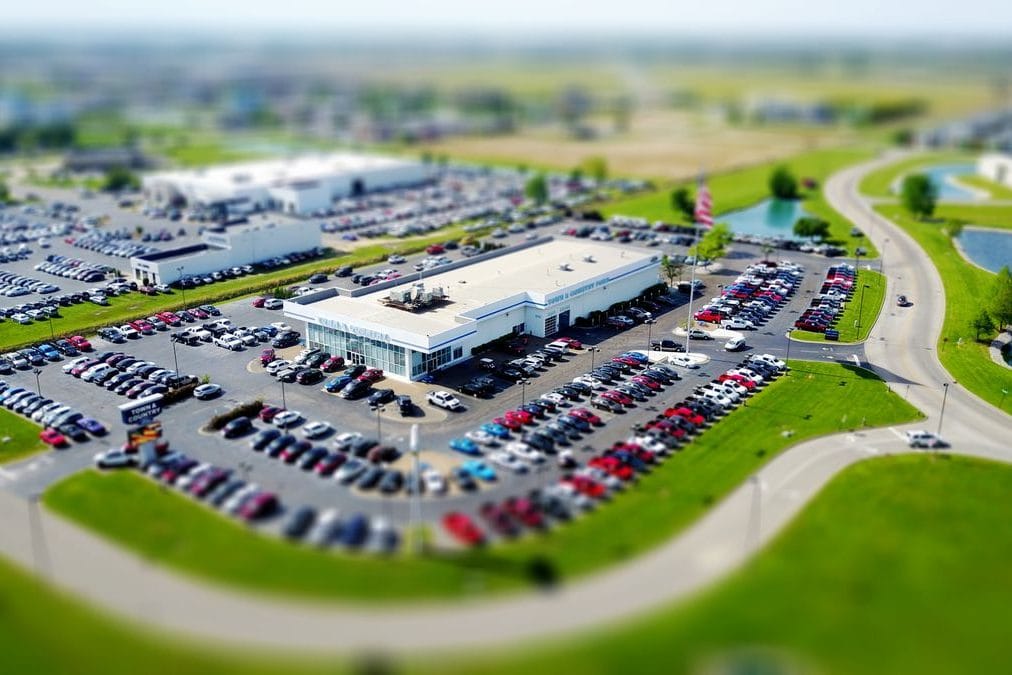
Walk onto almost any dealer lot the weekend before Labor Day and you'll see the same banners: "Biggest Sale of the Year," "Employee Pricing for Everyone," "0% APR — Won't Last." Some of that is real. A lot of it is the same markup dressed up in a different font. The trick for 2026 is knowing which discounts come from an automaker actually clearing inventory and which ones are just the sticker price the dealer was always going to ask, wrapped in a countdown clock.
Why Labor Day Actually Moves Prices
The discount isn't really about the holiday. It's about the calendar year automakers run behind. Most brands start shipping the following model year's vehicles to dealers in July and August, which means every 2026 model still sitting on the lot in late August is inventory a dealer wants gone before it starts looking stale next to a shinier 2027 badge on the windshield. Ford, Chevrolet, Toyota, and Honda all lean into this the same way — discount the outgoing stock hard enough that a buyer picks the model that's actually sitting in the lot rather than special-ordering the new one. That's a genuine price lever, and it's the single biggest reason late August through mid-September consistently beats March or June on transaction price for anyone not chasing a brand-new model year.
What's changed for 2026 is the inventory picture behind that lever. Chip shortages that kept lots half-empty through 2022 and 2023 are gone, and dealers are carrying more stock than they have in three years — Cox Automotive's mid-2026 data put days-of-supply for mainstream brands well above the 60-day mark that usually signals a buyer's market. More inventory means more pressure on dealers to move metal, and that pressure is real leverage in a negotiation. It also means the "limited time" urgency plastered across every ad is mostly theater. If a deal looks good on Tuesday, it will very likely still be there on the following Tuesday.
The Discounts That Are Real
Manufacturer rebates and incentives — the ones that show up as a line item on the Monroney sticker or in the automaker's own consumer offers — are the closest thing to a guaranteed discount you'll find this time of year. These come directly from Ford, Toyota, Hyundai, and the rest, not from the dealership's own margin, which means they're not something a salesperson invented to look generous. Outgoing model-year vehicles routinely carry $1,500 to $4,000 in factory cash on mainstream sedans and crossovers, and that number climbs into five figures on slower-selling trucks and full-size SUVs that automakers are eager to clear.
- Factory rebates on the current outgoing model year — check the automaker's own site, not just the dealer's ad, since the numbers should match
- Loyalty and conquest cash if you're trading in a competing brand or already own one from the same manufacturer
- Military and first-responder discounts, which stack on top of most other offers and are consistently under-claimed
- Low or 0% APR financing on specific trims, though this one deserves its own scrutiny, and we'll get to why below
Dealer-added "discounts," on the other hand, deserve a second look before anyone gets excited. If a sticker shows a $3,000 markdown but the vehicle's history report reveals it's been sitting on the lot since April, that's not generosity — that's a car nobody else wanted at the original price, finally priced closer to what it should have cost from day one.
The 0% APR Trap Nobody Explains Properly
Zero-percent financing sounds like free money, and sometimes it is. The catch is that automakers usually make buyers choose between the low APR offer and the cash-back rebate — you rarely get both, and the fine print buries that trade-off two paragraphs down. On a $35,000 vehicle, a $3,000 rebate paired with a normal 6.5% loan can beat 0% financing paired with no rebate, depending on the loan term and how long you plan to keep the car.
Run the actual math before signing anything. A 60-month loan at 0% on $32,000 costs $533 a month with zero interest paid over the life of the loan. The same $32,000 with a $3,000 rebate applied first, financed at 6.5% over 60 months, runs closer to $567 a month — but that gap narrows fast on shorter loan terms, and it can flip entirely in the rebate's favor on a 36-month term. Anyone planning to pay a loan off in three years, not five, should almost always take the cash and skip the promotional rate. Dealers rarely volunteer that comparison because the 0% offer is the one that gets people in the door.
What Actually Moves the Needle at the Table
Trade-in value is where most Labor Day "deals" quietly get clawed back. A dealer can advertise a huge discount on the new vehicle and then lowball the trade-in by $2,000 to $3,000 below its real market value, and the net cost to the buyer ends up identical to a car with no advertised discount at all. Get a trade-in appraisal from Carvana or CarMax before walking into any dealership — not to sell there, but to have a number in hand that keeps the dealer honest.
Negotiate the out-the-door price, not the monthly payment. This is the single most repeated piece of advice in car buying for a reason: dealers can make almost any deal look attractive by stretching the loan term or adjusting the trade-in number, all while keeping a monthly figure that sounds fine. A $450-a-month payment on a 72-month loan and a $450-a-month payment on a 60-month loan are not remotely the same deal, and the difference can run into thousands of dollars over the life of the loan.
Documentation and dealer fees deserve their own line of scrutiny too. States like Florida and California cap or regulate these fees, while others leave dealers free to charge whatever they want to add on top — a $799 "dealer prep fee" for a car that arrived on a truck already prepped is padding, not a service. Ask for an itemized breakdown before agreeing to anything, and don't be shy about asking a fee to be removed entirely.
Which Vehicles Are Actually Worth Buying Right Now
Full-size trucks and three-row SUVs are sitting the longest on lots in 2026, which makes them the strongest category for a real discount this season. Ford's F-150 and Chevrolet's Silverado have both carried elevated days-of-supply through the summer, and outgoing-trim examples of both are showing $4,000 to $7,000 off MSRP at dealers willing to move volume before the new model year ramps up. Compact and midsize sedans are a mixed bag — the Honda Accord and Toyota Camry still sell close to sticker because demand for efficient sedans hasn't cooled the way SUV demand has, so don't expect the same leverage there.
EVs are the outlier worth watching closely this year. With the federal EV tax credit phased out earlier in 2026, automakers have been layering their own incentives directly onto sticker price to keep volume moving, and that's produced some of the steepest real discounts of any category — Hyundai and Kia in particular have pushed Ioniq and EV6 pricing down by $5,000 or more through manufacturer cash rather than relying on a credit that no longer exists. Anyone cross-shopping a gas crossover against an EV in the same price bracket should run both numbers before assuming the gas option is cheaper.
What doesn't make sense right now: buying a brand-new 2027 model the moment it lands on the lot. Early allocation units carry the smallest discounts of the entire model cycle, and the pricing pressure that makes Labor Day worthwhile simply hasn't built up yet on a car that arrived three weeks ago.
A Realistic Timeline for the Next Two Weeks
- Get pre-approved financing from a bank or credit union before visiting a dealer — this becomes your baseline to compare against any dealer-offered rate, including the 0% promotions
- Pull an independent trade-in quote from at least one online buyer so you're not negotiating blind
- Shop the outgoing model year specifically, and ask the salesperson directly how long a given unit has been on the lot
- Compare the rebate-plus-standard-rate math against the 0% offer using your actual loan term, not the dealer's default 60-month assumption
None of this requires waiting for the actual Labor Day weekend crowd. Dealers start discounting outgoing inventory in early August and the pricing pressure typically holds through the third week of September, so anyone dreading a packed showroom on the holiday itself can get the same numbers on a quiet Tuesday afternoon two weeks earlier.