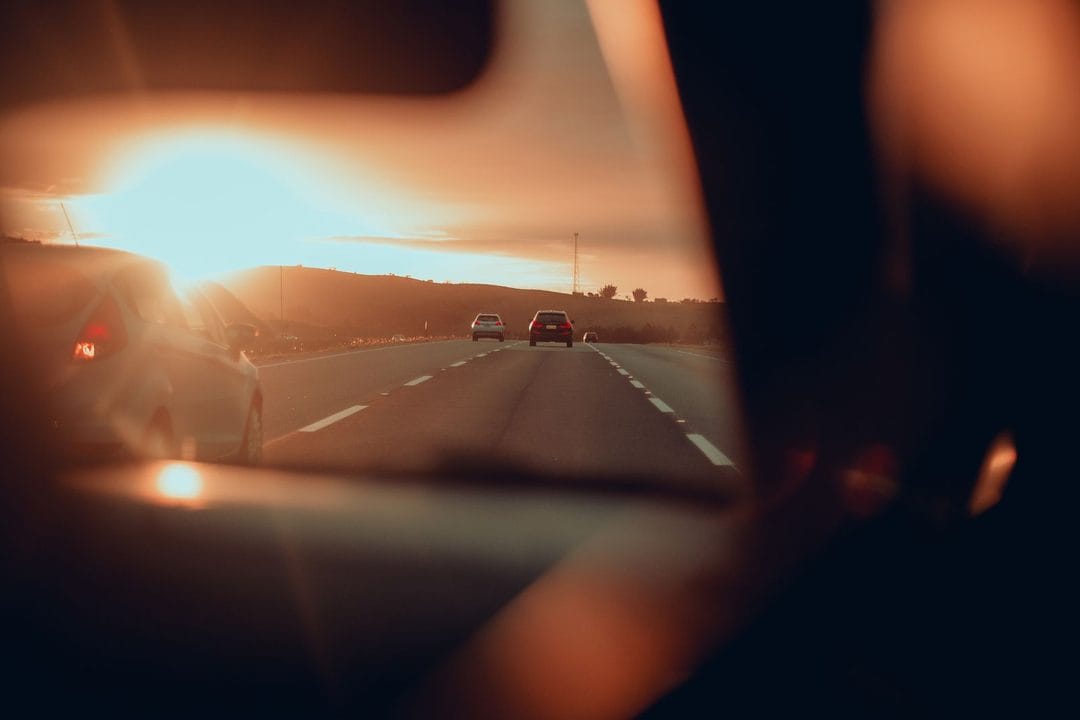
At 7:42 a.m. on a clear late-September morning, a driver heading east on a two-lane road hits a stretch where the sun sits almost exactly on the horizon. The windshield goes white for two, maybe three seconds. Wipers won't help. Sunglasses barely cut it. And that driver isn't unlucky — they're on one of roughly a dozen U.S. commuter corridors that turn into a glare trap every year around the same week in September.
Why the equinox is the actual trigger
The culprit isn't "fall weather" in any general sense — it's geometry. Around the autumnal equinox (September 22 in 2026), the sun's path crosses closer to due east and due west than at any other point in the year, and its angle above the horizon during the morning and evening commute drops low enough to sit directly in a driver's sightline on east-west roads. Insurers and AAA safety bulletins point to University of Michigan Transportation Research Institute analysis putting sun-glare-related crashes at roughly 9,000 a year nationwide, and the numbers cluster hard around two windows: the weeks bracketing the March and September equinoxes. Summer sun is higher overhead and mostly avoids the windshield; winter sun is low but commute times shift with earlier sunsets, so fewer drivers are pointed straight at it. September catches people off guard because the clocks haven't changed yet — everyone's still driving to work at the same time they did in July, except now the sun has dropped into the wrong spot.
This is where most drivers get the wrong mental model. They treat glare like rain — something to just power through with the visor down. It doesn't work that way. A low sun through a dirty or slightly pitted windshield doesn't just reduce visibility, it scatters into a wall of light that can fully obscure a stopped car or a pedestrian in a crosswalk for a second or two. Two seconds at 45 mph is nearly 130 feet of travel with the driver effectively blind. Add a bug-streaked windshield — which by late September has usually accumulated a full summer's worth of residue — and the scatter effect gets measurably worse, because grime and micro-scratches diffuse light instead of letting it pass straight through.
The commute windows that matter most
Not every drive is equally exposed. The risk concentrates on roads that run close to true east-west, during the 30 minutes after sunrise and the 30 minutes before sunset — which, in most of the continental U.S. in late September, lands right in the 7:15–7:45 a.m. and 6:45–7:15 p.m. bands.
A few things worth knowing before the next two weeks:
- Overpasses and hilltops make it worse — losing a few feet of elevation drops the sun angle relative to the road even further
- Wet or recently washed windshields glare less than dirty ones, which is counterintuitive but consistent, since clean glass scatters far less light
- If your regular route has one bad stretch, Google Maps and Waze both let you save an alternate that avoids it — a five-minute detour that dodges the worst two minutes of blind driving is a trade most drivers should be making and currently aren't
What actually cuts the glare — and what doesn't
Polarized sunglasses help, but only some of the way, and drivers who rely on them alone are still underprotected during the worst 60–90 seconds of a bad commute. A pair like Costa Del Mar's 580G lenses (roughly $250–$280) or Bolle's driving-specific line (around $150) cuts reflected glare off wet pavement and hoods effectively, but direct sun sitting low on the horizon still overwhelms them. Combine polarized lenses with a clean windshield — inside and out — and the improvement is much bigger than either fix alone. Rain-X Original glass treatment (about $6 a bottle) or a proper interior clean with Meguiar's Perfect Clarity glass cleaner removes the inside haze that most drivers never think to address, and that inside film is often the bigger offender because it's closer to the eye and catches light at a flatter angle.
Windshield condition matters more than most owners assume. A windshield with stone-chip pitting or fine scratches scatters low sun dramatically worse than a smooth one, and no amount of cleaning fixes that — only replacement does. Safelite's standard windshield replacement runs $250–$400 out of pocket depending on the vehicle and whether it carries ADAS cameras that need recalibration afterward, and most comprehensive insurance policies cover it with a low or zero deductible in the states that mandate free glass coverage, including Florida, Kentucky and South Carolina. If your windshield is pitted enough that oncoming headlights already look like starbursts at night, that's the same optical scattering working against you at sunrise — treat it as a safety expense, not a cosmetic one, and get it replaced before the glare season rather than after a near-miss.
Visor extenders — cheap clip-on panels that add three or four inches of shade below the factory visor — genuinely work, and at $10–$15 on Amazon they're one of the better dollar-for-dollar fixes available. Aftermarket anti-glare windshield film is a different story: it's legal in only a handful of states for the windshield itself, since most state tint laws require at least 70% light transmission through the windshield and cap any tinted strip to the top four to six inches above the AS-1 line — California, New York and Pennsylvania all enforce this specifically. Check local statute before buying film, because a windshield citation during a routine stop costs more than the film did.
One thing worth admitting
None of this fully solves the problem on the worst stretches. Even with clean glass, good sunglasses and a visor extender, there are roads where a driver heading due west at 6:55 p.m. in late September is simply going to lose the crosswalk for a second or two, no matter what precautions they've taken. The honest advice on those specific stretches isn't a product — it's slowing down and covering the brake, the same way you'd handle a blind curve.
Beyond the windshield
Dashboard and mirror glare compound the problem in ways drivers rarely trace back to the sun. A dusty dashboard reflects upward into the lower half of the windshield exactly when the driver needs that zone clearest, so a five-minute interior wipe-down with a microfiber cloth does more for visibility than it gets credit for. Rearview mirrors with auto-dimming — standard on most trims above the base level since around 2018 — help with following glare but do nothing for the sun sitting straight ahead; drivers relying on the mirror's day/night toggle should remember it only affects the rearview glass, not the windshield itself.
If a glare crash happens anyway
Sun glare doesn't automatically clear a driver of fault, and that surprises people. Most state statutes — California Vehicle Code 22350 among them — hold drivers to a "basic speed law" standard requiring them to drive at a speed safe for existing conditions, and a blinding sun counts as a condition the same way fog or heavy rain does. Insurance adjusters know this, and a claim that simply says "the sun was in my eyes" rarely moves the needle on a liability split. What actually helps is documentation: dashcam footage showing the glare in real time is now common enough that Progressive, State Farm and Allstate all accept it directly through their mobile claim apps, and a $60–$100 dashcam like a Garmin Mini 2 or a Vantrue N2 Pro pays for itself the first time it settles a disputed claim in minutes instead of weeks. Without footage, the claim comes down to witness statements and whoever's insurer argues harder — a position nobody wants to be in over a five-second visibility gap that a phone-mounted camera could have proven outright.
The two-week window closes on its own
By early October the sun's angle has shifted enough that most commuters stop noticing the problem, right up until it comes back around the March equinox — and by then, most people have forgotten it was ever an issue. That's really the core failure here: this isn't a rare hazard, it's a scheduled one, and scheduled hazards are the easiest kind to prepare for and the ones drivers consistently ignore anyway.