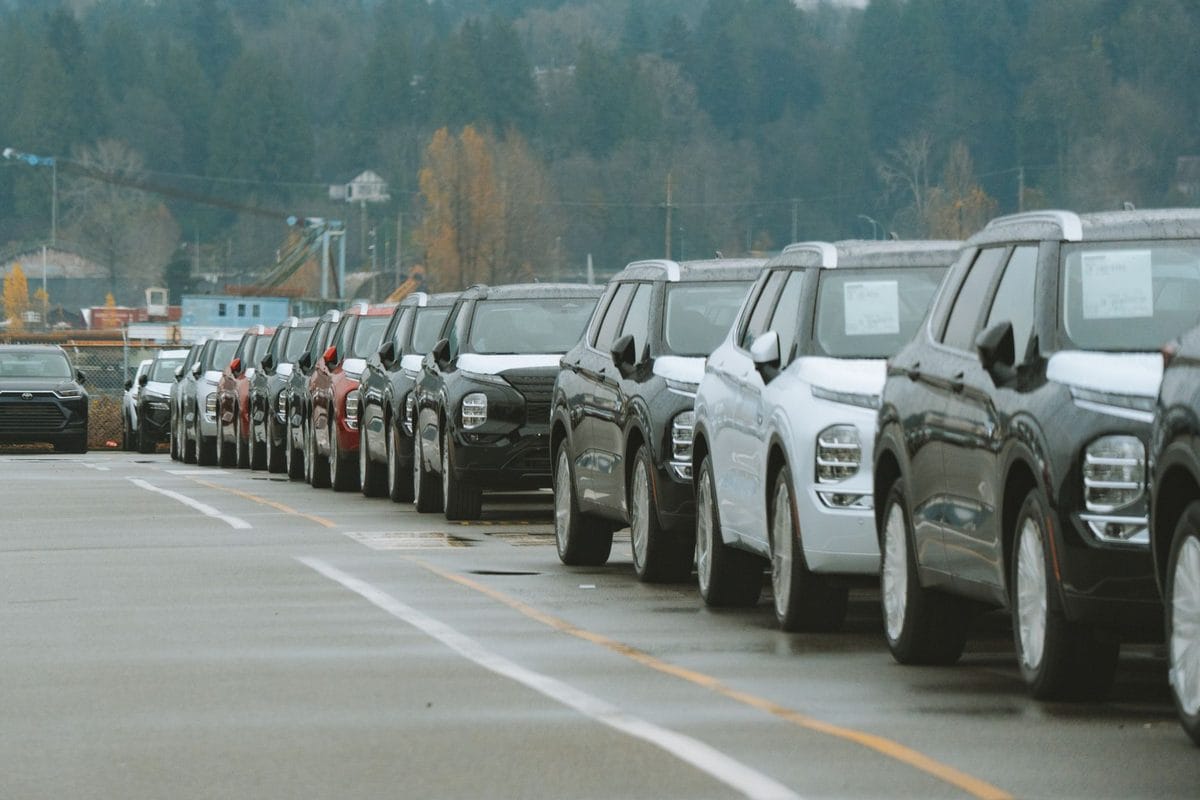
A new Subaru Outback costs $5,030 more than it did a year ago, and Subaru didn't touch the engine, the interior, or a single option on the trim sheet. The 2026 model starts at $36,445, and the difference sits almost entirely in the same place every other automaker is now hiding price increases: raw material costs, import tariffs, and a destination fee that keeps climbing faster than inflation. If you're shopping for a car this August, the sticker in the window tells you less than it used to. What actually determines your final price now runs through three overlapping tariff programs, a batch of quietly rising delivery charges, and a federal tax credit that stopped existing eleven months ago.
Where the extra money is actually going
Three overlapping tariff authorities now touch nearly every vehicle sold in the US, and untangling which one applies to your specific car matters more than most buyers realize. Section 232 of the Trade Expansion Act imposes a flat 25 percent tariff on imported passenger vehicles and auto parts, a rate that has held steady since April 2025 and applies regardless of where the individual parts originate. Section 301 goes further for Chinese-built electric vehicles specifically, layering on a 100 percent tariff that has effectively erased BYD, along with every other Chinese EV brand, from American dealer lots. Then there's Section 122, activated after the Supreme Court's February 2026 ruling, which added a 10 percent global tariff on most imported goods — but passenger vehicles and auto parts were carved out from that one specifically, so it doesn't stack on top of the 25 percent Section 232 rate the way early reporting suggested it might. The combined effect, according to an Automotive News analysis of manufacturer financial filings, is $35.4 billion in tariff costs absorbed by the industry since the programs took effect. Some of that gets eaten by automaker margins. Increasingly, it gets passed straight to the window sticker.
Toyota has absorbed the worst of it. The automaker is projecting $9.1 billion in tariff-related costs for the fiscal year ending March 2026, a burden that helped drag its nine-month net income down 25 percent. GM expects gross tariff costs in the $3 billion to $4 billion range this year, slightly worse than 2025 simply because it now carries a full year of exposure instead of nine months. Ford's number is smaller and trending the right direction: a roughly $2 billion net hit in 2025 that management expects to shrink by about $1 billion in 2026 as delayed auto-parts tariff credits finally take effect. Stellantis, hurt as much by falling shipments from Canada and Mexico as by the tariff rate itself, pegs its 2025 impact at around €1.5 billion.
The destination fee trick
Rather than raise the MSRP outright — a number that gets compared, screenshotted, and argued over on every car forum — automakers have found a quieter lever. (Dealers call it the delivery charge; most buyers never ask why it changed.) Destination fees on 2026 models have hit record highs: $2,795 on most full-size GM and Ford trucks and SUVs, with the Ford F-150's fee alone up 25 percent from the 2024 model year to $2,595. GM raised the Silverado and Sierra's destination charge by 40 percent in a single year, a move that works out to roughly $748.8 million in additional revenue across the two trucks' combined sales volume. None of that shows up when a shopper compares MSRPs between trims or model years.
Which brands are passing costs on — and which are eating them
Audi raised prices across most of its 2026 lineup by $800 to $4,100 depending on the model, then tried to soften the blow by throwing in three years of prepaid maintenance on every new car. Mazda and Honda are doing something similar but calling it something else: both automakers say the extra few hundred dollars on a Civic, CR-V, or Odyssey reflects new equipment packaging rather than a straight price hike, even though the net effect on the buyer's payment is identical. Ferrari didn't bother with the euphemism — it's raising prices by as much as 10 percent and letting the tariff explain itself. Not every brand is following the same script, though, and that's the part worth paying attention to before you sign anything.
Buy a vehicle built primarily in the US, and the math changes. Domestic production has climbed to 54.4 percent of everything sold in the country this year, partly because Toyota and Stellantis have poured billions into American plants specifically to sidestep the 25 percent import tariff — the Alfa Romeo Stelvio, previously built in Italy, moves to North American production this year for exactly that reason. Subaru's Outback hike is the exception that proves the point: it's assembled partly overseas, and the tariff exposure shows up directly in the sticker in a way a Camry built in Kentucky never will.
The EV credit is gone, and something smaller replaced it
The federal $7,500 credit for new EVs and $4,000 credit for used ones ended for good on September 30, 2025, killed by the One Big Beautiful Bill Act that President Trump signed on July 4 that year. There's one narrow exception: if you signed a binding purchase contract and put down even a nominal deposit on or before that September deadline, you can still claim the credit when the car is finally delivered, even if delivery slips into 2026. Outside that carve-out, the credit is simply zero now — no phase-down, no partial amount, nothing. The federal EV charger installation credit lapsed too; equipment generally had to be placed in service before July 1, 2026 to qualify, and that window has closed.
In place of the EV incentives, Congress added something that applies to every car buyer, not just EV shoppers: a deduction, not a credit, of up to $10,000 in auto loan interest per year, running from the 2025 through 2028 tax years. It's worth less than a comparable credit dollar-for-dollar, since a deduction only reduces taxable income rather than the tax bill directly, and it comes with a catch that trips up more buyers than it should — the vehicle's final assembly has to be in the United States. A car assembled in Ontario or Puebla doesn't qualify, even if the badge on the hood is American.
What actually makes sense to do this month
If you're cross-shopping a gas SUV built domestically against an equivalent import, buy the domestic one. The price gap that tariffs created isn't closing this year, and Ford, GM, and the Japanese brands with established US plants now hold a real structural cost advantage over anything shipped in from Europe or built outside their newer North American lines. Skip financing through a lender that can't confirm your specific vehicle's final assembly location before you sign, too — that $10,000 interest deduction is worthless if the car doesn't qualify, and you don't want to find that out at tax time instead of at the dealership.
EV prices are heading in the opposite direction. Automakers, no longer boosted by a federal credit that used to prop up demand, are expected to cut EV prices by 3 to 8 percent this year just to move inventory, so an EV bought in December will likely cost less than the identical one bought today, tariffs notwithstanding. That's a reversal from every other segment covered here, and it's the one place where waiting actually pays off.
Kelley Blue Book's July numbers, expected around mid-August, will show whether the average transaction price holds below $50,000 for an eighth straight month or finally breaks through it. The June figure sat at $49,758 — just $242 short of that mark, with buyers already leaning harder on cheaper subcompact SUVs to keep it there.