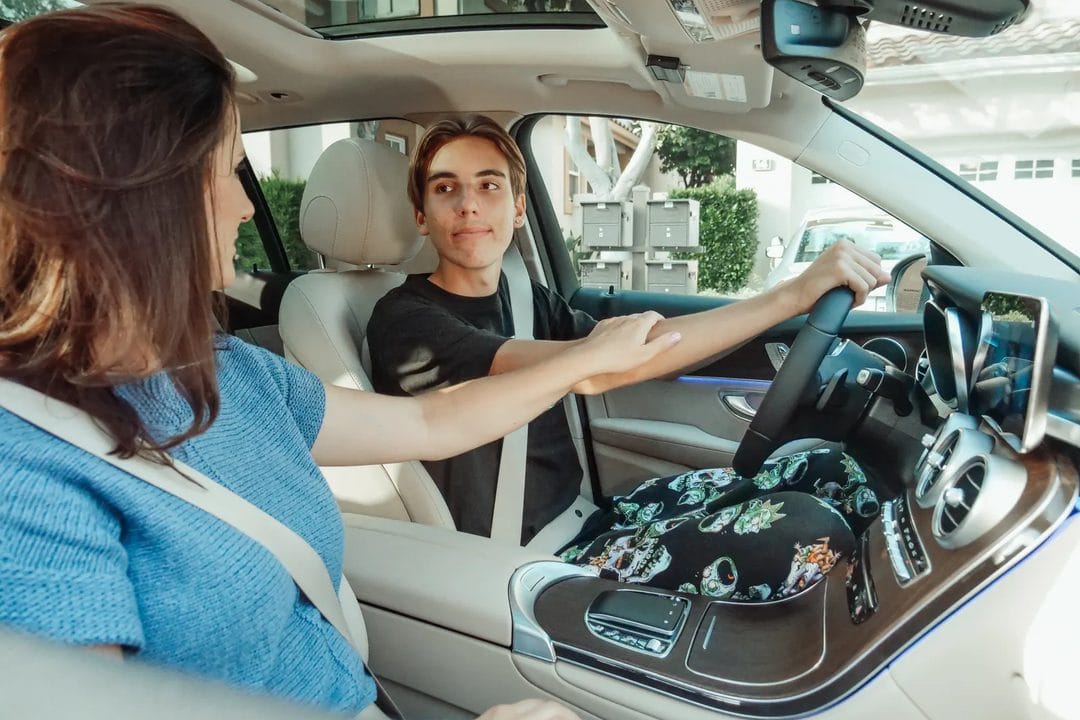
The insurance renewal letter usually shows up before the car does. You open it expecting the same number as last year, and instead there's a line item that wasn't there in June — because somewhere between the DMV road test and the first week of school, your kid went from "learner's permit" to "licensed driver," and every insurer in the country treats that shift as a five-alarm event. August is when this collides with reality for thousands of families: school starts, the new driver wants independence, and the used car lot down the street suddenly looks a lot more relevant than it did in March.
None of that means you need to panic-buy the first compact sedan on the lot. It means the decision deserves fifteen minutes of research instead of a Saturday-afternoon impulse, because the choices that feel obvious — cheap, small, low miles — are often the wrong ones for a driver who's still building judgment behind the wheel.
The Insurance Bill Comes Before the Car Does
Before you shop for a vehicle, shop for the number that will actually determine your monthly budget. Adding a 16- or 17-year-old to an existing family policy typically pushes premiums up somewhere in the 90–120% range, according to surveys regularly run by Bankrate and Insurance.com — and that's on top of whatever you're already paying. A teen driver on the parents' policy costs less than a stand-alone policy in nearly every case, so unless there's a specific reason to separate coverage, keep the new driver on the family plan and call your agent before you sign anything at the dealership. Ask specifically about multi-car and multi-policy discounts too; bundling the new car with an existing homeowner's or renter's policy through the same carrier can offset a chunk of the increase on its own. Shop the increase across at least three carriers before committing, because the spread between insurers for the exact same teen driver and the exact same car can run into hundreds of dollars a year. GEICO might price a 17-year-old add-on very differently than State Farm does for an identical Honda Civic in the same zip code, and the only way to know is to actually run the quotes side by side instead of assuming your current carrier is competitive.
Progressive, GEICO, and State Farm all now offer usage-based programs — Snapshot, DriveEasy, and Drive Safe & Save, respectively — that track braking, speed, and phone handling through an app or a plug-in device. Good-student discounts are real too: most major insurers still knock 10–15% off a teen's portion of the premium for a B average or better, which is worth mentioning to your agent explicitly because it isn't always applied automatically.
What the Car Itself Should (and Shouldn't) Be
Skip the horsepower conversation entirely.
The Insurance Institute for Highway Safety has published teen-driver vehicle guidance for years, and the throughline hasn't changed: avoid anything with a big engine, avoid the smallest subcompacts, and prioritize vehicles that carry a Top Safety Pick or Top Safety Pick+ rating with standard automatic emergency braking. A 300-horsepower coupe might feel like a fun graduation present. It's also the single fastest way to turn a new driver's overconfidence into a claim. Mass and stability matter more than most parents assume, and that's exactly why a five-year-old Honda CR-V or Toyota RAV4 usually beats a brand-new subcompact hatchback on real-world safety, even though the hatchback has the newer badge. Electronic stability control has been federally mandated on every new US vehicle since the 2012 model year, so that part is a given on anything built in the last decade — the differentiator now is the driver-assist suite layered on top of it, and that's where the gap between trims actually shows up.
Buy for the vehicle you'd want your kid in during a highway merge gone wrong — not the one that's cheapest to insure on paper. A midsize crossover with a blind-spot monitor and standard AEB, built between 2019 and 2022, typically lands in the $18,000–$24,000 range depending on mileage and trim; a comparable sedan like a Mazda 6 or Subaru Legacy can undercut that by $3,000–$5,000 with similar safety scores. Either works. What doesn't work is a $6,000 fifteen-year-old sedan with no side airbags just because the sticker price is friendlier — that math only looks good until the first accident.
Three Cars That Look Like Bargains and Aren't
A used muscle car or a lifted pickup truck both show up in "affordable first car" searches for the wrong reason — the purchase price is low, but insurance for a high-horsepower or oversized vehicle under a teen driver's name routinely erases whatever was saved at the lot. A tiny subcompact with a curb weight under 2,600 pounds fares worse than its size suggests in a collision with anything larger, which describes most of what shares the road with it. And a manual-transmission car, however charming the idea of "teaching them to drive stick," adds one more mechanical task to master during the exact window when attention needs to stay on traffic, not on the clutch.
The Telematics Question Nobody Wants to Ask
Somewhere in this process, you'll have to decide whether to put a tracking app on your teenager's phone. Life360 and Bouncie are the two most common choices, and both will tell you exactly where the car is, how fast it's going, and whether it just braked hard at 11:40 on a Tuesday night.
Plenty of parents install it quietly and never mention it. That's a mistake — not because the tracking itself is wrong, but because a new driver who finds out later feels surveilled rather than supported, and the conversation you should've had up front turns into a fight about trust instead of a conversation about safety. Tell them it's there, tell them why, and treat the first few months of hard-braking alerts as data, not ammunition for a lecture every single time.
The Phone Stays in the Cupholder
More than thirty states now ban handheld phone use behind the wheel outright, and the rest restrict it heavily for drivers under 18 specifically, so this isn't really optional the way it might have felt a decade ago. Set up Apple's Do Not Disturb While Driving or Android's Driving Focus before the first solo trip, not after the first close call — both silence notifications automatically and can auto-reply to texts, and both take about two minutes to configure once and never think about again. Pair the phone to the car through Apple CarPlay or Android Auto if the vehicle supports it; routing navigation and music through the dashboard screen removes most of the reasons a hand ever leaves the wheel to touch a phone.
Where the Real Money Goes: Driver's Ed and the First Year
Every state runs a graduated driver licensing program, and most require some formal instruction before a full license is issued — the specifics vary by state, but a private driver's ed course typically runs $300–$700 for the classroom-plus-behind-the-wheel package, on top of whatever the public high school offers for free or a nominal fee. Pay for the private course if the school's waitlist stretches past a semester; a delayed license costs more in family logistics than the course itself.
The first twelve months on the road carry the highest crash risk of a driver's entire life, which is exactly why the vehicle-and-insurance decisions above matter more here than at almost any other point. Cut corners on the car and the savings evaporate the first time a claim gets filed — the deductible alone can wipe out a year of "we saved money on the cheaper car."
None of this needs to be finished before Labor Day. But if the conversation hasn't happened yet — insurance, the actual car, the tracking app, the driving hours — this is the week to have it, before a first-period tardy slip becomes the reason the whole plan gets rushed.