The first properly cold morning of the year always produces the same scene in driveways across the country: you climb in, start the engine, and a small amber light shaped like a horseshoe with an exclamation mark blinks on before you've even reached the end of the block. Nothing broke overnight. Air contracts as temperature drops, and tire pressure follows it down at a rate of roughly 1 psi for every 10°F the mercury falls. A tire that read a comfortable 34 psi in August's afternoon heat can show 28 or 29 psi on a 45°F morning in late September, and that's exactly the range where most TPMS systems start flashing. Drivers who've owned the same car for years still call the dealership convinced something is wrong, and the honest answer is almost always that nothing failed — the calendar just turned.
Ignoring that light because "it's probably just the cold" is the single most common mistake drivers make going into autumn, and it's also the one with the clearest fix. Underinflated tires wear faster at the edges, generate more heat at highway speed, and lose a measurable amount of grip in exactly the wet, leaf-covered conditions that define October and November driving. The National Highway Traffic Safety Administration has linked underinflation to tens of thousands of tire-related crashes a year, and the fix costs nothing but five minutes and access to an air pump.
Check Pressure Cold, Not After You've Been Driving
Tire pressure has to be measured when the tire is "cold" — meaning it hasn't been driven on for at least three hours, or driven less than a mile. Heat from driving expands the air inside the tire and inflates the reading by 4-6 psi on a 20-minute commute, which makes a genuinely low tire look fine. The right number to fill to is printed on the door jamb sticker on the driver's side, not the number molded into the tire's sidewall — that sidewall figure is the tire's maximum rating, not the vehicle manufacturer's recommendation, and filling to it will make the ride harsher and the contact patch smaller than it should be.
Buy a digital tire gauge if you don't already own one. The pencil-style analog gauges sold at gas stations are notoriously inaccurate, often off by 2-3 psi in either direction, which is enough to hide a genuinely low tire from a driver who trusts the reading. A decent digital gauge runs $8-15 and pays for itself the first time it catches a slow leak before it becomes a Saturday-morning flat. Check all four tires plus the spare once a month through autumn and winter; the swing from a 70°F afternoon to a 35°F morning is enough to trip the warning light on nearly every car built since 2008, when TPMS became mandatory on new vehicles sold in the US. Skip the spare at your own risk — it's the one tire nobody checks until the moment they desperately need it.
The Tread Depth Test That Actually Matters
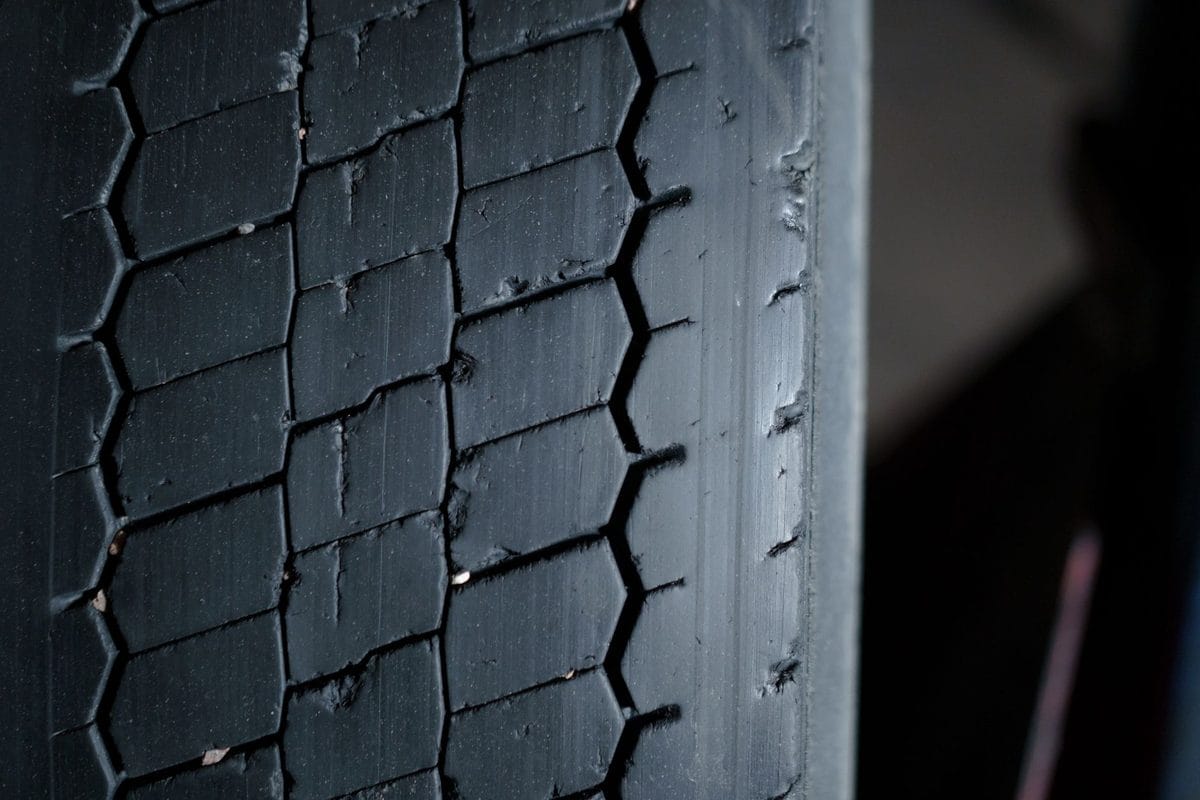
Most drivers know the penny test — insert a penny into the tread groove with Lincoln's head pointing down, and if you can see the top of his head, the tread is at or below 2/32 of an inch, the legal minimum in every US state. What fewer drivers know is that 2/32" is a legal floor, not a safety target. Independent testing by Consumer Reports and by tire manufacturers themselves shows wet braking distances get measurably longer well before a tire hits that legal limit — a tire at 4/32" can need an extra 15-20 feet to stop from 60 mph in the rain compared to a tire at 8/32", which is roughly the length of a parking space.
A quarter works better than a penny for this reason: insert it with Washington's head down, and if the top of his head disappears into the groove, you've still got at least 4/32" left. That's the real number worth tracking once wet leaves and early frost start showing up on the roads. Rotate tires every 5,000-7,500 miles to keep wear even across all four corners — front tires on a front-wheel-drive car typically wear 20-30% faster than the rears, and skipping rotation is the most common reason people end up needing two tires replaced at once instead of catching uneven wear early.
What Uneven Wear Is Actually Telling You
- Wear concentrated on the outer edges usually means underinflation over time, not a single cold morning
- A cupped or scalloped pattern across the tread often points to worn shocks or struts rather than the tire itself
- Wear on one edge only, consistently, is a classic alignment symptom — an alignment check runs $80-150 and is far cheaper than the tire it saves
- Feathering, where the tread blocks feel sharp on one side and rounded on the other, also traces back to alignment more often than people assume
When "All-Season" Quietly Stops Working
Not every tire problem is about wear.
Here's the part tire shops don't advertise clearly enough: all-season tires are a compromise built around a rubber compound that starts stiffening once temperatures drop below roughly 45°F. Above that line, the compound stays pliable enough to grip well in rain and light conditions. Below it, the same rubber gets progressively harder and less able to conform to the road surface, which means longer stopping distances and reduced cornering grip even on dry pavement — well before any snow or ice enters the picture.
If you live in Georgia, Texas, or coastal California, this barely matters. Your region rarely holds a multi-week stretch below 45°F, and a quality all-season tire from Michelin's Defender2 or Continental's TrueContact line will outperform a dedicated winter tire nine months of the year without you ever needing to swap anything. That's a real trade-off worth stating plainly, because plenty of generic advice tells every driver in the country to buy winter tires, and that recommendation is simply wrong for a large share of the US.
If you're in the Northeast, Upper Midwest, Mountain West, or anywhere that regularly sees sustained sub-freezing mornings from November through March, the calculation changes, and all-season tires are the wrong choice for that stretch of the year, full stop. A dedicated winter tire — Michelin's X-Ice Snow, Bridgestone's Blizzak WS90, or Nokian's Hakkapeliitta line are the usual benchmarks reviewers reach for — uses a softer compound purpose-built to stay flexible in the cold, plus a tread pattern with far more biting edges. The stopping-distance gap between a good winter tire and an all-season tire on packed snow, at 20 mph, commonly runs 30-40 feet. That's not marketing. That's the difference between stopping short of a crosswalk and not.
A middle option exists for drivers who don't want to swap tires twice a year: all-weather tires, a smaller category carrying the three-peak mountain snowflake symbol that all-season tires lack. Nokian's WR G4 and General's Altimax All-Weather sit here — winter-capable enough to skip the seasonal swap, though they still trail a true winter tire on deep snow or glare ice.
The Weekend Checklist
- Check cold pressure on all four tires plus the spare, and set to the door-jamb number, not the sidewall number
- Run the quarter test at three points around each tire's circumference — tread wears unevenly, and one good spot doesn't mean the whole tire is fine
- Look for cracking in the sidewall rubber, especially on tires more than five years old regardless of remaining tread depth
- Confirm your rotation is current; if you can't remember the last one, book it this week
- If you're in a winter-tire region, order them now — late September and early October is before the rush, and shops routinely book two to three weeks out once the first real cold snap hits in November
None of this takes more than twenty minutes on a Saturday morning, and the tires are the only part of the car actually touching the road. A transmission problem gives you warning signs for weeks. A tire that's lost its grip on a wet, leaf-covered curve gives you none.