Your Honda's front brakes have started squealing at every stop sign, and the quote from the dealership service department reads $340 — parts and labor, no rotors needed. A shop three exits down offers to do the same job for $210. A coworker who once rebuilt a transmission in his garage tells you the whole thing costs about $55 in parts and takes him under an hour. All three numbers are true. Which one applies to you depends on details that a drive-through quote almost never mentions, and those details are worth forty minutes of your time before you book anything.
What Shops Actually Charge, and Why the Range Is So Wide
Brake labor rates in the US now run $120 to $170 an hour depending on region and shop type, and that single number explains most of the spread you'll see between quotes. A dealership technician working on a Toyota Camry or Honda Civic bills at the top of that range and typically installs OEM pads, which cost 20 to 30 percent more than the aftermarket equivalent — figure $340 to $420 for a front-axle pad job with no rotor work. An independent shop running the same Wagner ThermoQuiet or Akebono pads a chain store would use often lands at $180 to $260 for the identical job, because their overhead is lower and they're not paying a service advisor's commission. Chain stores like Midas or Firestone sit in between, and they're the most likely to "find" a rotor problem during the free inspection that came with your oil change — sometimes correctly, sometimes not. A Ford F-150 or Chevrolet Silverado costs more everywhere, since the pads and rotors are physically larger and the calipers on newer trucks are often twin-piston units that take longer to service. None of this is a scam; it's the actual cost structure of the industry, and it's why the same job can legitimately cost $180 at one shop and $400 at another three miles away.
The DIY Parts List, and What It Actually Costs
If you're starting from a completely empty garage, the tooling adds up faster than people expect, though most of it is a one-time purchase. A basic floor jack runs about $110 to $140 (Craftsman and Powerbuilt both sell a serviceable 2-ton model), and you need a pair of jack stands on top of that — Torin's 3-ton stands are around $50 to $65 and non-negotiable; a jack alone is not a safe way to hold a vehicle off the ground. Add a torque wrench (Tekton's click-type runs about $45), a C-clamp or a dedicated caliper piston tool for around $15 to $25, a can of brake cleaner at roughly $6, and a tube of high-temperature brake grease for the slide pins at about $8. Lug nuts and caliper bolts have specific torque values in the owner's manual, and skipping the torque wrench is how people end up with a warped rotor or, worse, a wheel that works loose on the highway. Parts themselves are cheap by comparison: a set of Wagner or Bosch QuietCast pads for a Civic or Camry runs $45 to $65, OEM Honda or Toyota pads run $70 to $90, and if the rotors are still within spec — no deep grooves, no visible lip on the edge — you don't need to touch them at all. Add it all up and a first-time DIYer with an empty toolbox is looking at roughly $250 to $300 in one-time tool costs plus $50 to $90 in parts, which sounds worse than the $210 independent-shop quote until you realize the tools get reused for oil changes, tire rotations, and every brake job after this one.
Pads Alone vs. Pads and Rotors Are Two Different Jobs
Skip the rotors if the old ones still measure within the minimum thickness stamped on the hub — most don't need replacing at every pad change, no matter what the service writer implies.
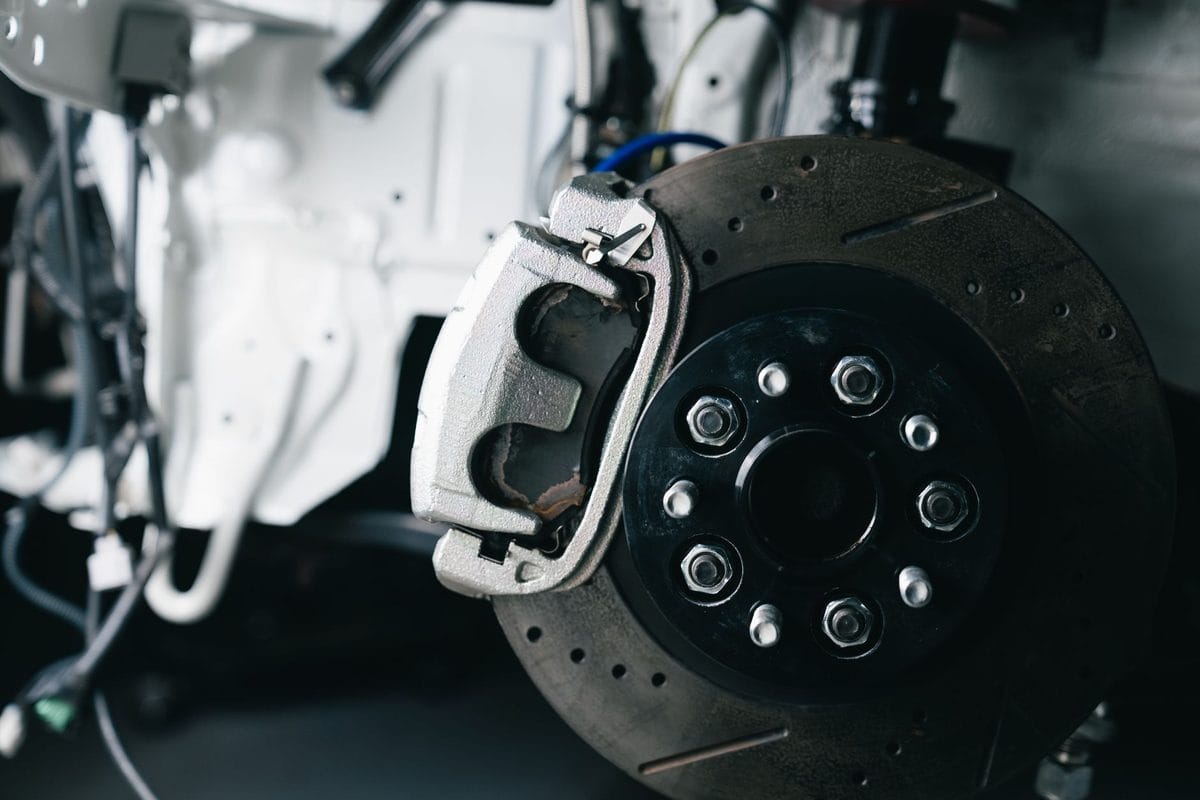
A pad-only swap on a car with healthy rotors takes 45 to 90 minutes per axle for someone doing their second or third brake job, longer the first time through. You're removing two bolts, sliding the caliper off, compressing the piston, and swapping pads — genuinely simple mechanical work. Adding rotors roughly doubles the time and the parts cost. Aftermarket rotors for a Camry or Civic run $35 to $60 each, so budget $150 to $220 in parts for a full front-axle pad-and-rotor job, plus another hour of labor if you're doing it yourself, or $380 to $550 if a shop does the whole thing.
Where the DIY Math Falls Apart
This is where the simple version of the story gets complicated. Electric vehicles use their friction brakes far less than gas cars because regenerative braking handles most everyday slowing, so pads on a Tesla Model 3 or Chevy Bolt can last 70,000 to 100,000 miles instead of the 30,000 to 45,000 typical for a gas sedan driven the same way. The catch is that calipers on a car that rarely brakes hard can seize from disuse — rust builds up on slide pins that never get worked, and a caliper that won't release cleanly will eat a new pad in a few thousand miles no matter how fresh it is. Newer vehicles add another wrinkle: many Fords, GMs, and European models built since roughly 2018 use an electronic parking brake with a caliper motor that has to be retracted through a bi-directional scan tool before you can even get the pads out, and a basic OBD-II code reader won't do it. If your car falls into that category, either rent the right tool from a parts store that offers loaner programs or hand the job to a shop — there's no clamp-and-go workaround for an electronic caliper.
The Fluid Flush Nobody Budgets For
Brake fluid pulls moisture out of the air through microscopic pores in the rubber lines, and once water content climbs past about 3 percent, your pedal starts feeling soft and the boiling point of the fluid drops enough to matter on a long mountain descent. Most manufacturers call for a flush every two to three years regardless of mileage — Toyota specifies 3 years or 30,000 miles on many models, Honda's interval runs closer to 3 years across the lineup — and it's the maintenance item drivers skip most often because nothing fails immediately when you ignore it. A shop flush runs $100 to $150 with DOT 3 or DOT 4 fluid, largely because bleeding four corners by hand is slow, fiddly work that ties up a bay for half an hour. Doing it yourself with a Motive Products power bleeder (about $60, and it screws onto the brake fluid reservoir cap to push fluid through under light pressure) turns the job into 20 minutes per corner solo, no second person pumping the pedal, for roughly $25 in fluid. One caution worth naming clearly: never mix DOT 3 and DOT 5 fluid — DOT 5 is silicone-based and doesn't blend with the glycol-based DOT 3 and DOT 4 most cars use, and cross-contaminating the system means a full flush and a bled master cylinder to fix it.
Two Calls You Should Just Make
Pad-only replacement on a vehicle with healthy rotors is worth doing yourself if you own basic tools already or are willing to buy them once — the mechanical risk is low, the savings are real ($100 to $250 depending on the vehicle), and the skills carry over to every future brake job you'll ever do. Full pad-and-rotor jobs on a truck or an SUV with big twin-piston calipers are a different call: rent or buy a torque wrench rated for the higher spec, and if you don't already have a jack rated for the vehicle's weight, the parts savings shrink fast once you price in tools you'll barely use again. Don't let a chain-store inspection talk you into rotors your old ones don't need, and don't attempt an electronic-caliper reset with a $20 code reader that isn't built for it.
Either way, the squeal telling you it's time isn't subtle, and neither is the bill if you wait until it turns into a grinding noise — by then you're paying for rotors no matter which route you pick.