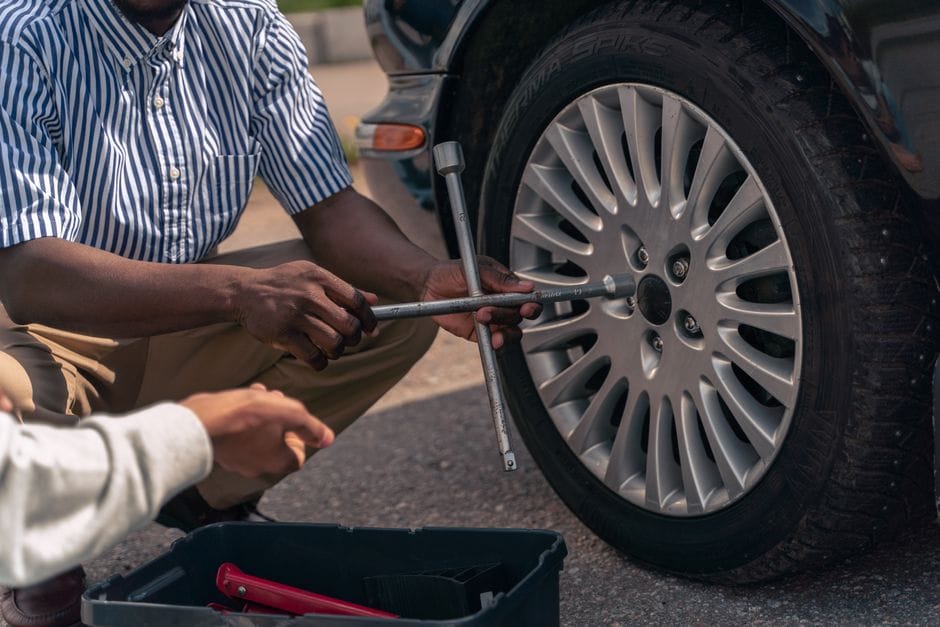
A flat tire ranks among the most common roadside problems, and unlike most of them, you can fix it yourself in fifteen minutes if you know the steps. Doing it safely matters as much as doing it quickly, especially near traffic.
Get to Safety First
Pull as far off the road as you can onto firm, level ground, away from traffic. Turn on your hazard lights, set the parking brake, and if you have wheel chocks or even a rock, block the wheel diagonally opposite the flat. Never change a tire on a slope or soft shoulder where the jack can slip.
The Sequence
- Loosen the lug nuts a quarter turn while the tire is still on the ground; they're tight.
- Position the jack under the reinforced jacking point near the flat and raise until the tire is just off the ground.
- Remove the lug nuts, pull the flat, and mount the spare.
- Hand-tighten the nuts, lower the car, then torque them firmly in a star pattern for even seating.
Living With a Compact Spare
- Most spares are temporary donuts with a speed limit around 50 mph.
- They're good for a limited distance, often about 50 to 70 miles, just enough to reach a shop.
- Check the spare's pressure now and then; a flat spare is a cruel surprise.
Get the Real Tire Sorted Soon
A donut has little tread and changes how the car handles, so drive gently, avoid the highway if you can, and skip hard cornering. Have the flat repaired or replaced promptly; many punctures in the center tread are fixable, while sidewall damage means a new tire. Practice the steps once in your driveway so the first time isn't on a dark roadside in the rain.