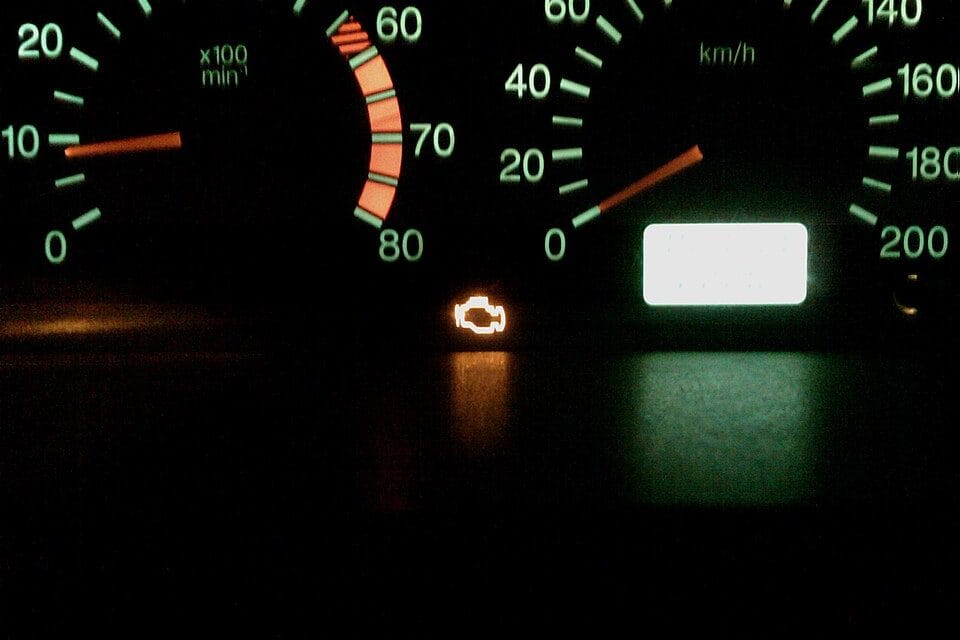
You're merging onto the interstate when a small orange light blinks on next to the speedometer. Is that a $40 sensor or a $4,000 transmission? Most drivers have no idea, and the owner's manual buried in the glovebox rarely gets consulted until it's too late. Dashboard warning lights aren't decoration — they're a triage system, and learning to read that system correctly is the difference between a routine stop at AutoZone for a diagnostic scan and a tow truck on the shoulder of I-95.
The good news is that the color of the light tells you almost everything you need to know before you even identify the icon. Automakers follow a shared convention across nearly every brand sold in the US, from Ford and Chevrolet to Toyota and Honda: red means stop, yellow or amber means get it checked soon, and green or blue is just informational. That system exists because engineers assume, correctly, that most people can't memorize forty different icons but can absolutely recognize a color-coded emergency.
Red Lights: Pull Over Now
A red warning light means the vehicle is telling you that continuing to drive risks serious damage or an immediate safety failure. Don't finish the errand. Don't drive the extra fifteen minutes home. Get off the road as soon as it's safe to do so.
Oil Pressure Warning
This one looks like an old-fashioned oil can with a drip coming out of the spout, and it's arguably the most urgent light on the entire dashboard. It doesn't mean your oil is low — it means oil pressure has dropped to a level where your engine's moving parts aren't getting lubricated. Keep driving on a lit oil pressure light and you can seize the engine within a few miles, turning a routine oil change into a $5,000–$8,000 engine replacement. Pull over immediately, shut the engine off, and check the dipstick if you can do so safely. If the oil level looks fine, the problem is likely the oil pump or a pressure sensor, and the car needs a flatbed, not a slow drive to the shop.
Engine Temperature Warning
A thermometer icon, sometimes with wavy lines underneath, means the engine is overheating. Coolant systems in modern cars are built to handle stop-and-go traffic in Phoenix summers, so if this light comes on, something has actually failed — a burst hose, a bad thermostat, or a water pump that's given out. Pull over, turn off the AC, and if you're stuck in traffic, put the heater on full blast; it sounds miserable, but it pulls heat away from the engine and buys you time. Never open the radiator cap on a hot engine. Cooling system repairs typically run $150 to $900 depending on what failed, but a warped cylinder head from ignoring the light can push that number past $2,500.
Brake System Warning
A red circle with an exclamation point, often paired with parentheses around it, usually signals either low brake fluid or a parking brake left partially engaged. Rule out the parking brake first — it's the most common false alarm. If the light stays on with the brake fully released, treat it as a hydraulic system problem and have the car towed rather than risk a brake failure at highway speed.
Yellow or Amber Lights: Schedule a Visit, Don't Panic
Amber lights are the "this needs attention, but you're not going to strand yourself on the shoulder" category. You can typically finish your drive and book an appointment within the next few days to a couple of weeks, depending on the specific light.
Check Engine Light
This is the light everyone dreads and almost nobody understands, mostly because it can mean roughly two hundred different things. It's tied to the OBD-II diagnostic system that's been mandatory on every car sold in the US since 1996, and it can be triggered by something as trivial as a loose gas cap or as serious as a failing catalytic converter. Some states, including California and New York, also use the light's status as part of the emissions inspection required to renew registration, so an ignored light can turn into a failed inspection months later. A steady amber check engine light means drive normally but get it scanned soon — most AutoZone and O'Reilly Auto Parts locations will read the code for free. A flashing check engine light is a different animal entirely: it usually points to a misfire that's dumping raw fuel into the exhaust system, which can cook a catalytic converter in minutes. Flashing means treat it like a red light — reduce speed, avoid hard acceleration, and get to a shop. Replacing a fouled catalytic converter runs $945 to $2,500 depending on the vehicle, which is exactly the bill a five-minute scan at a parts store could have helped you avoid.
Tire Pressure Monitoring System (TPMS)
That horseshoe-shaped icon with an exclamation point means one or more tires has dropped below the manufacturer's recommended pressure, which federal law has required on all new passenger vehicles since 2007 under the TREAD Act. Cold weather alone can trigger it — tire pressure drops roughly 1 PSI for every 10-degree drop in temperature, so a chilly October morning can light it up even with no actual leak. Check all four tires with a gauge at a gas station; if one is significantly lower than the rest, you likely have a slow leak from a nail or a bad valve stem, and it's worth a same-day stop at a tire shop rather than a scheduled appointment.
Battery and Charging System
A rectangle with plus and minus signs means the alternator isn't charging the battery properly. You can usually drive on the battery's remaining charge for a while — sometimes twenty minutes, sometimes two hours, depending on how much you're running the AC, headlights, and infotainment system. Head straight to a shop rather than running more errands, because once the battery drains fully, the car won't restart, and you'll be dealing with a tow instead of a $200–$500 alternator repair.
What the Colors Actually Mean, and Where People Get It Wrong
Most drivers assume any dashboard light is an emergency, which leads to two bad habits: either panicking over a low washer fluid indicator, or — worse — getting so used to ignoring nuisance lights that they tune out a genuinely dangerous one too. Neither instinct serves you well. The honest answer is that you need to actually learn your specific vehicle's icon set, because Ford, Honda, and Subaru don't always use identical symbols for identical problems, and the printed guide in your owner's manual is more reliable than a generic chart you find online.
There's also a category that gets overlooked constantly: green and blue lights aren't warnings at all. Cruise control indicators, turn signals, high beams — these are status confirmations, not alerts, and they don't belong in the same mental bucket as a glowing red thermometer. If you're not sure what an icon means and it isn't red, it's almost always safe to finish your drive and look it up once you're parked. And if you genuinely can't tell whether a light is amber or red on a washed-out dashboard display in direct sunlight, treat it as red; the cost of an unnecessary stop is nothing compared to towing a seized engine. If it's red, that assumption doesn't apply — treat every red dashboard light as a stop-the-car situation until you know otherwise, even if the engine sounds and feels completely normal. Plenty of catastrophic engine failures started with a driver saying "but it was still running fine." Mechanics hear that line constantly from customers who kept driving on a lit oil pressure warning because the engine still sounded normal — right up until the moment it didn't.
What a Diagnostic Scan Actually Costs
A lot of drivers avoid getting the check engine light scanned because they assume it's expensive. It usually isn't. Chain parts stores like AutoZone, Advance Auto Parts, and O'Reilly will read the OBD-II code and tell you what it means at no charge, though they won't diagnose the root cause beyond that code. A full diagnostic at an independent shop or dealership — where a technician actually traces the code to its source — typically runs $80 to $150, and that's money well spent before you approve any repair estimate. Skipping the scan and just replacing parts based on a guess is how people end up paying for a new oxygen sensor when the real problem was a $15 gas cap.
One more thing worth knowing: clearing the code without fixing the underlying issue doesn't make the problem go away, it just makes it invisible for a while. Some shops will do this if you ask, and the light will come back within days or weeks once the system re-detects the fault. If you're buying a used car and the seller mentions the check engine light "just came on and we're not sure why," that's worth a pre-purchase inspection, not a shrug.
The Bottom Line
Learn the difference between red and amber before you need to know it at 70 mph. Red means find a safe place to stop, now — oil pressure, coolant temperature, and brake warnings are not lights you drive through. Amber means the car is asking for an appointment, not a rescue, though a flashing check engine light is the one amber exception that behaves like a red one. Keep your owner's manual's warning-light page bookmarked on your phone, because the two minutes it takes to identify an icon correctly can save you thousands of dollars and, in the case of brakes or overheating, a lot worse than money.