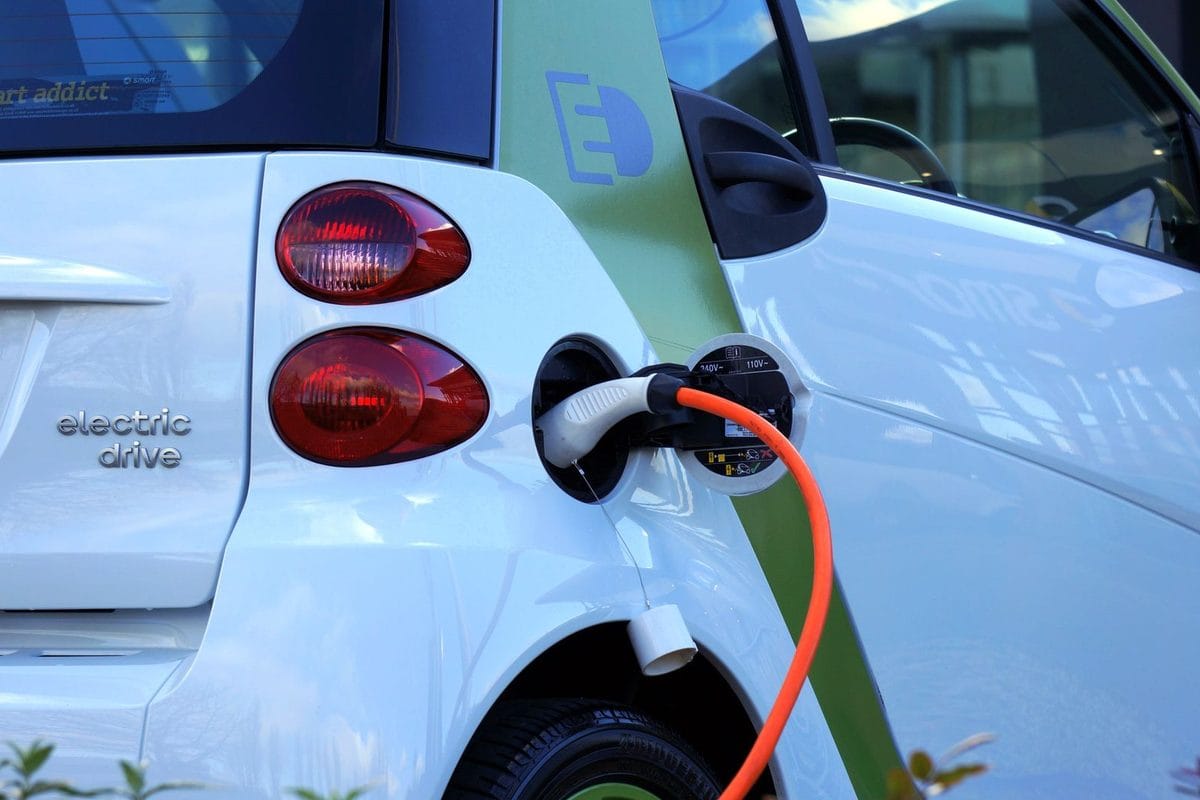
Pull into a DC fast charger at 20 percent state of charge and the screen might show 150 kW pouring into the battery. Wait until the car reads 82 percent, plug into that same charger with the same cable, and the number can drop to a third of that — sometimes less. Nothing about the hardware changed. The battery did.
The Curve, Not a Straight Line
Automakers advertise a single peak charging number — 150 kW, 250 kW, 350 kW — and drivers naturally assume that's the rate they'll get for the whole session. It isn't. Every lithium-ion EV battery follows a charging curve: fast at low states of charge, fast through the middle stretch, then a steep taper that starts somewhere between 55 and 80 percent depending on the car. By the time the pack hits 90 percent, most vehicles are pulling a fraction of their peak rate, and the last 10 percent can take nearly as long as the first 50. This is why Electrify America, EVgo, and Tesla Supercharger stalls all display a live kilowatt number instead of a fixed rate — the software is constantly recalculating what the pack can safely accept at that exact moment, and that number keeps shrinking as the battery fills. Watch the display through a full session and you'll see it happen in real time: a steady climb, a plateau, then a slide that gets steeper the closer the percentage gets to 100.
Why the Industry Settled on "10 to 80 Percent"
Every EV spec sheet quotes charging time as "10 to 80 percent" for a reason: that's the window where the curve stays flat enough to be worth advertising. Hyundai and Kia's 800-volt platform, used in the Ioniq 5 and EV6, can go from 10 to 80 percent in roughly 18 minutes on a 350 kW station — a number that made headlines when both cars launched. Push either car to 100 percent on the same charger and you'll likely add another 20 to 25 minutes for the final fifth of the battery, because the charging rate by that point has fallen to a crawl.
What's Actually Happening Inside the Cell
Every fast charger you've ever used is programmed to slow down, not speed up, as the battery fills.
Lithium-ion batteries charge by moving lithium ions from the cathode to the anode, where they slot into layers of graphite. Early in a charge, with the anode mostly empty, ions have plenty of room and the battery management system allows a high current. As the anode fills up, the available slots shrink, and pushing ions in too fast risks lithium plating — a buildup of metallic lithium on the anode surface instead of the intended intercalation. Plating isn't a minor inconvenience. It permanently reduces battery capacity and, in extreme cases, raises the risk of an internal short. Engineers size the taper specifically to keep the pack away from that edge, which is why the slowdown gets more aggressive the closer the battery gets to full, not less. None of this shows up on a spec sheet, because "we deliberately throttle your charger to protect the cells you paid for" doesn't sell cars the way a peak-kW number does.
To prevent that plating risk, the BMS steadily throttles current as the state of charge climbs, especially past 80 percent, where the voltage gets close to the pack's upper limit and the margin for error narrows. Heat plays a role too — DC fast charging generates real thermal load, and the last stretch of a charge is when a hot pack is most likely to hit its temperature ceiling, forcing the car to pull back even further. Cold weather does something similar from the other direction: a battery below roughly 50°F charges slower across the entire curve, not just at the top, because the chemistry itself moves ions more sluggishly when it's cold.
Real Numbers From the Road
A Tesla Model 3 on a V3 Supercharger can hit 250 kW briefly at low state of charge, but by 50 percent it's typically down in the 120–150 kW range, and past 80 percent it often falls under 50 kW. A Ford Mustang Mach-E, rated for up to 150 kW, tapers earlier and more gradually — its curve is flatter but lower overall, so the gap between "fast" and "slow" phases is less dramatic than on the Tesla. The Hyundai Ioniq 5 and Kia EV6, thanks to that 800-volt architecture, hold a higher rate longer into the curve than most competitors, which is the main reason their 10–80 percent numbers look so good on paper.
None of this is guesswork on the driver's part — most EV navigation apps, including the car's own trip planner, A Better Routeplanner, and PlugShare, model the curve for the specific vehicle and station and will tell you, before you leave the driveway, roughly how long a stop should take. Ignore that number and just watch the percentage climb, and a 25-minute stop can quietly become 45.
How to Actually Plan Charging Stops Around It
The single biggest mistake on a long EV road trip is charging to 100 percent at a fast charger because it feels safer. It isn't more efficient — it's the opposite. Charge to 80 percent and get back on the road. Watching the percentage crawl from 85 to 100 while the rate drops below 30 kW wastes time you could spend covering another 60 to 80 miles at highway speed. A single 10-to-80-percent stop typically runs somewhere between $15 and $25 on most US fast-charging networks for a sedan or small crossover, and that price doesn't change no matter how slowly the last 20 percent trickles in — so there's no financial upside to waiting it out.
A few habits make the difference on a real trip:
- Plan two or three shorter stops instead of one long one — charging 20 to 80 percent twice is almost always faster overall than 10 to 100 percent once.
- Use a route planner that accounts for your specific car's curve, not just its peak kW rating, since two cars with the same "150 kW max" spec can behave very differently near the top of the charge.
- Time your stops around meals or bathroom breaks so the 20–25 minutes it takes to hit 80 percent doesn't feel like dead time.
- Check the charger's shared-power setup before you park — some Electrify America and EVgo stalls split output between two adjacent plugs, and parking next to another fast-charging EV can quietly cut your rate in half.
When Charging Past 80 Percent Actually Makes Sense
There's a real exception here, and it matters for anyone driving through the rural West. If the next fast charger is 140 miles away — a genuine gap you'll find on stretches of I-80 through Wyoming or US-50 through central Nevada — charging to 90 or 95 percent is the correct call, slow taper and all. The math on saved minutes only works when your next stop is a short hop away. Range anxiety on a genuinely sparse corridor is a real cost, and no charging curve is worth running a battery down to 3 percent to save fifteen minutes at the plug.
Automakers keep pushing peak kilowatt numbers because they're easy to put on a spec sheet, and 250 kW sounds a lot more impressive than "18 minutes for the middle 70 percent, then a long tail." The number that actually predicts your road trip is the shape of the curve, not the label on the charger.