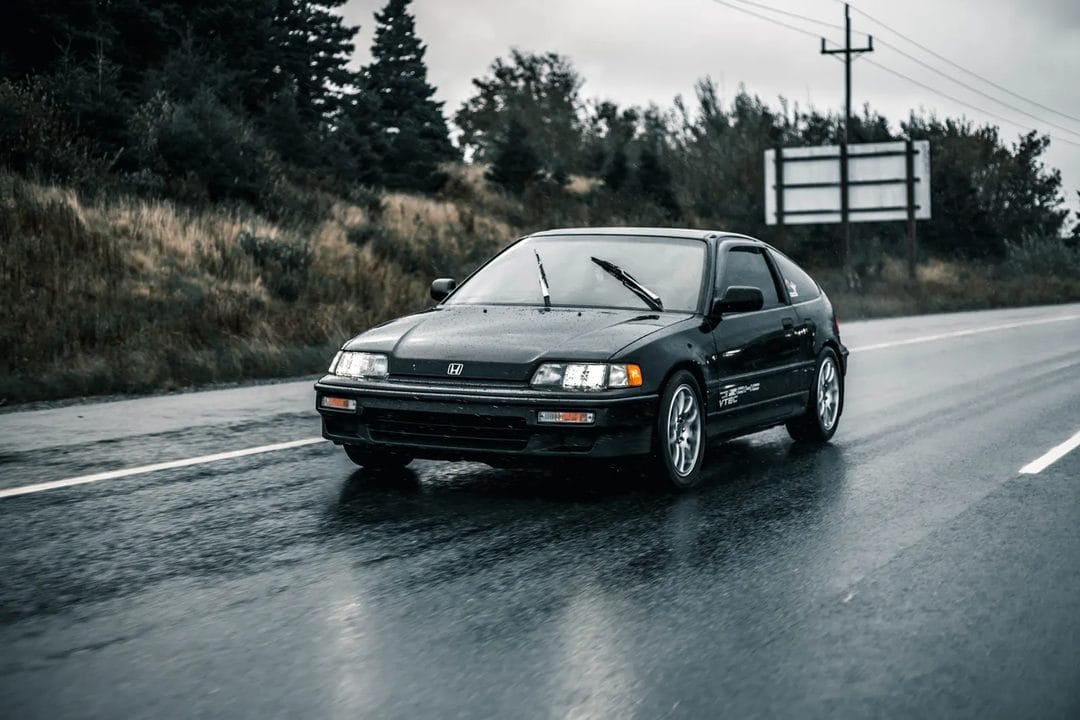
You're doing sixty-five on the interstate when the sky opens up — not a drizzle, but the kind of downpour where the wipers on their fastest setting still can't keep the windshield clear. Then it happens: the steering wheel goes strangely light in your hands, the back end drifts half a lane over, and for about a second and a half your car isn't really driving on the road anymore. It's driving on a thin sheet of water sitting on top of the road. That's hydroplaning, and this summer it's happening on more American highways than usual, because 2026 has brought a run of intense, fast-moving thunderstorm cells across Texas, the Gulf Coast, and the Midwest that dump an inch of rain in twenty minutes rather than spreading it out over an afternoon.
The Physics Nobody Actually Explains at the DMV
Hydroplaning starts the moment your tires can't channel water out from under them fast enough, and a wedge of water builds up between the rubber and the pavement. Tread depth is the entire story here — a new tire has about 10/32 of an inch of tread and can clear a lot of water through those grooves, but the legal minimum in most states is 2/32, and at that depth a tire is essentially a smooth disc with cosmetic lines cut into it. Consumer Reports testing has shown that tires worn down to 4/32 need roughly double the stopping distance on wet pavement compared to tires at 8/32, and hydroplaning risk climbs sharply once you cross that same threshold. Speed matters just as much as tread: most hydroplaning incidents happen above 35 mph, and the risk keeps climbing the faster you go, because there's simply less time for water to escape from under the tire before the next puddle arrives. Front tires usually hydroplane first, since they're the ones cutting through standing water before the rears ever reach it, which is exactly why the steering wheel goes vague before the back of the car does anything unusual. A quick way to check your own tread without a gauge: slide a penny into the groove with Lincoln's head upside down, and if you can still see the top of his head, you're already below the point where wet-weather grip falls off fast.
Tire pressure plays a smaller but real role too. An underinflated tire has a wider, flatter contact patch that traps more water instead of slicing through it — another reason the $10 pressure gauge in your glovebox earns its keep more in July thunderstorms than it does on a dry October morning. None of this means you need premium tires to stay safe. It means the $40 tread-depth check a shop will do for free matters more in a wet summer than any amount of driving skill.
How Much Water Can Actually Move a Car
This is the number that surprises people every single year: NOAA's Turn Around Don't Drown campaign puts the threshold at just 12 inches of moving water to float most passenger cars, and 6 inches is enough to stall a sedan's engine or sweep a smaller vehicle off its intended path. A foot of water sounds trivial when you're looking at a flooded intersection from the driver's seat — it looks like a puddle, not a hazard — which is exactly why flash flooding kills more people in vehicles than almost any other weather-related cause in the US according to National Weather Service data. Texas Hill Country, often called flash flood alley because of its shallow soil and steep terrain, sees water rise from ankle-deep to axle-deep in under fifteen minutes during a heavy cell. Arizona's monsoon season brings a similar trap: a dust storm rolls through first, drivers slow down for reduced visibility, and then the rain that follows turns dry washes into fast-moving channels within minutes.
Here's the part that trips up even cautious drivers: you can't always tell how deep standing water is just by looking at it, especially at night or where the road has no curb to use as a depth reference. A stretch of road you've driven a hundred times in the dry can hide a foot-deep dip you've simply never seen filled in before — which is exactly why "I know this road" is one of the worst reasons to keep driving through water you can't measure.
What to Actually Do the Second You Feel the Car Go Light
Ease off the accelerator — don't slam the brakes. Braking hard while hydroplaning locks up wheels that have already lost contact with the pavement, which does nothing except guarantee you can't steer once the tires do regain grip. Keep the steering wheel pointed the direction you want to go rather than fighting every twitch of the car; oversteering during a hydroplane is how a minor loss of traction turns into a full spin. Most vehicles will settle back onto the road within a second or two once you've slowed enough for the tires to punch back through the water layer. If your car has anti-lock brakes — which is essentially every vehicle sold in the US since the late 1990s — you can apply steady, firm brake pressure once you feel the tires regrip; the ABS system will pulse the brakes for you far faster than your foot could manage manually. Cruise control deserves a mention here too, and it's the opposite of helpful: switch it off the moment rain gets heavy, because a car trying to hold a set speed will accelerate right through a puddle instead of letting you back off naturally. None of this needs to happen in a panic. Losing traction for a second and a half feels like a lot longer than it actually is, and drivers who ride it out calmly almost always come through it with nothing worse than a racing heartbeat.
For standing water across the road itself, the rule that actually holds up is blunt: if you can't see the bottom, don't drive into it. Six inches of water can reach the underside of most sedans and stall the engine through the exhaust or air intake, and once a car stalls in rising water, restarting the engine can pull water directly into the cylinders — a mistake that turns a stalled car into a $6,000 to $12,000 engine replacement. Turn around and find another route. It costs you fifteen minutes. Driving through costs a tow truck at best and a totaled car at worst.
Regional Patterns Worth Knowing Before You Hit the Road
Storm behavior isn't the same everywhere, and knowing your region's pattern changes how much warning you actually get.
- Gulf Coast and Florida afternoons build thunderstorms almost daily in summer, usually between 2 and 5 p.m., often clearing within an hour — the National Weather Service's Storm Prediction Center tracks this pattern closely enough that a quick check of the radar before a 3 p.m. drive can save you the worst of it.
- Texas Hill Country and the Edwards Plateau region are prone to sudden flash floods because thin soil over limestone bedrock can't absorb rain fast enough, so water runs straight into low-water crossings.
- Arizona and the desert Southwest get monsoon season from roughly mid-June through September, when dust storms (haboobs) frequently precede intense, short-lived rain.
- The Midwest and Plains see derecho events — long-lived, fast-moving lines of severe thunderstorms that can produce both flash flooding and damaging straight-line winds over hundreds of miles in a single afternoon, and a few more localized patterns depending on how close you are to a river basin.
None of this means canceling a road trip over a forecast with a 40 percent chance of rain. It means building fifteen or twenty minutes of slack into a summer drive through any of these regions, because that's usually the difference between waiting out a cell at a gas station and finding yourself stopped on a flooded overpass.
Insurance: What Comprehensive Actually Covers
Flood damage to a vehicle falls under comprehensive coverage, not collision — a distinction that catches a lot of drivers off guard when they call their insurer after water gets into the cabin or engine. If you only carry liability coverage, which is the legal minimum in nearly every state, flood damage isn't covered at all. Comprehensive typically runs somewhere between $150 and $400 a year depending on your state and vehicle, and the average flood-related claim from a passenger vehicle lands in the $3,000 to $8,000 range once you factor in a damaged engine, waterlogged electronics, and mold remediation in the upholstery. Progressive, State Farm, and Geico all recommend photographing the water level against the car before it's towed — insurers use that photo to distinguish "engine got wet from driving through a puddle" from "car sat submerged overnight," and the payout can hinge on it.
The Small Habits That Actually Help
Turn your headlights on the moment the wipers go on — more than 30 states legally require it, and the ones that don't still benefit from the visibility. Drop your following distance rule from the standard three seconds to five or six in heavy rain; stopping distances roughly double on wet pavement, and a car in front of you hydroplaning is not something you want to discover eighty feet too late. Cut your speed by about a third from what you'd normally drive on that same stretch of highway when it's dry — not to a crawl, just enough that your tires have time to do their job. And if the wipers on high still can't keep up with the rain hitting the glass, that's not a wiper problem to fix later. That's the storm telling you to find an exit and wait it out.