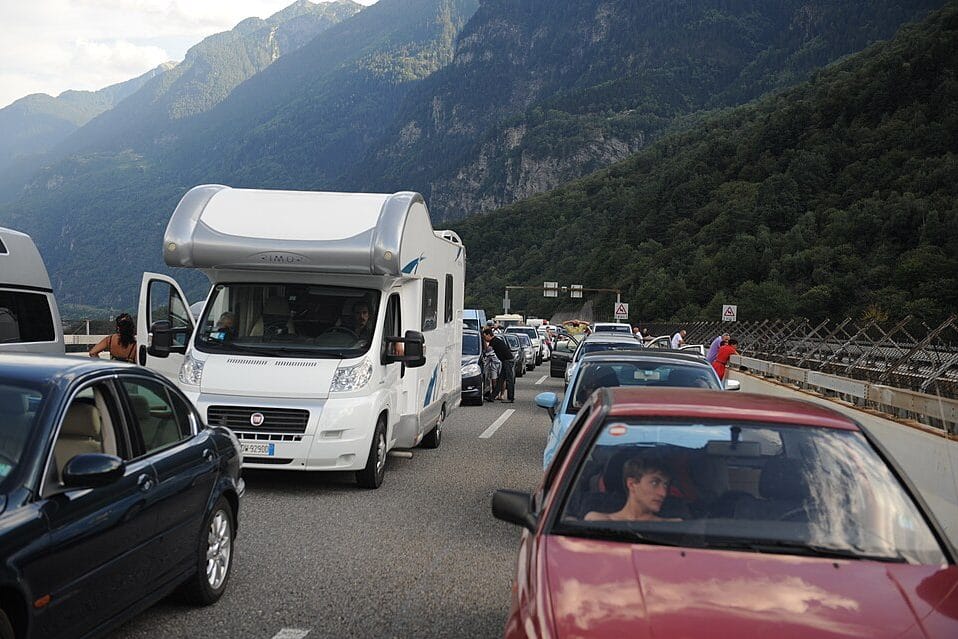
The tow truck driver waiting outside a Costco Tire Center in Phoenix last week put it bluntly: three dead batteries and a blown radiator hose before 10 a.m., and it wasn't even the hottest day of the month. August does that to cars. Temperatures under the hood can climb past 250°F even when the thermometer outside reads a manageable 95, and a cooling system, a battery, or a set of tires that's been quietly weakening since June finally gives out right when everyone's trying to squeeze in one last road trip before Labor Day.
Every shop from Jiffy Lube to the independent garage down the street sees the same pattern this time of year. Cars that limped through a mild spring suddenly can't handle 100-degree pavement, stop-and-go interstate traffic, and a trunk loaded with coolers and camping gear. None of it is mysterious — heat accelerates almost every kind of automotive failure, from rubber degrading to electrolyte evaporating out of a battery — but most drivers don't think about any of it until they're stranded on the shoulder of I-10 with the hazards on.
The Tire Problem Nobody Checks Until It's Too Late
Hot asphalt is brutal on tires in a way that's easy to underestimate. Air expands as it heats up, so a tire set to 32 psi in a cool garage can read 38 or 40 psi after an hour of highway driving in August sun — and an underinflated tire heats up even faster, building toward a blowout instead of away from one. The tread matters just as much as the pressure. A tire worn down to 4/32 of an inch has roughly half the wet-weather stopping power of a new one, and by 2/32 — the legal minimum in most states — heat and friction can separate the tread from the casing entirely, which is how you end up with chunks of rubber scattered across three lanes of highway.
Check the pressure listed on the driver's-door placard, not the number stamped on the tire sidewall — those are two different figures, and drivers mix them up constantly. Get this done before a long trip, not during one; Discount Tire and Costco Tire Centers will check and adjust pressure for free, and it takes less time than filling a gas tank. Tires also age out regardless of tread depth. Check the DOT code on the sidewall — the last four digits are the week and year of manufacture — and treat anything past six years old as a serious question mark, even if the tread looks fine, since rubber compounds break down from UV and heat exposure whether or not the tire has seen much road.
The Cooling System Doesn't Forgive Procrastination
A coolant system that's low, contaminated, or running on a mix that's gone stale is the fastest way to turn a hot day into a call to roadside assistance. Coolant should be a roughly 50/50 mix of antifreeze and water — running straight water might seem harmless, but it raises the boiling-point problem instead of solving it, and it strips away the corrosion protection that keeps the radiator and heater core from rotting from the inside. Most manufacturers now recommend coolant flushes somewhere between 30,000 and 100,000 miles depending on the formulation, and the interval is printed in the owner's manual, not guessed at.
This is a case where newer isn't automatically better, either. Long-life coolants marketed as lasting 150,000 miles still degrade faster in vehicles that see a lot of stop-and-go summer traffic, where the engine spends more time at high temperature under load — the mileage number on the bottle assumes highway-style driving, not a daily crawl through downtown at 3 p.m. in July.
When the Temperature Gauge Climbs, the Damage Is Already Done
By the time the needle crosses into the red, or the dashboard throws a coolant warning, the engine may already be dealing with a warped head gasket or a cracked cylinder head — repairs that run $1,500 to $4,000 depending on the vehicle, versus a $120 to $180 coolant flush that could have prevented the whole thing. Pull over immediately if the gauge spikes. Don't keep driving to the next exit hoping it settles down; that's how a $150 fix becomes a $3,000 one.
The Battery That's Already Dying (It Just Doesn't Know It Yet)
Heat kills car batteries; cold just finishes the job left behind by summer.
It sounds backwards, since dead-battery season feels like it should be January, but the damage happens months earlier. High heat accelerates the chemical reaction inside a lead-acid battery, which speeds up water loss and internal corrosion, and by the time October or November rolls around and the first cold snap hits, a battery that was already down to 60 percent capacity from a summer of engine-bay heat simply can't deliver the cranking amps it used to. AAA's own roadside data has shown battery failure as a leading cause of summer breakdown calls for years running, right alongside tire and cooling-system issues — it's not a coincidence that three separate systems tend to fail from the same root cause.
Get the battery load-tested now, not in November. AutoZone, Advance Auto Parts, and most Interstate Batteries dealers will run the test for free in about five minutes, and a battery reading under 80 percent of its rated capacity is worth replacing before a road trip, not after it strands someone somewhere.
EV Owners Have a Different Kind of Heat Problem
Electric vehicles don't overheat the way gas engines do — a liquid-cooled battery pack in a Tesla Model Y or a Hyundai Ioniq 5 is engineered to handle triple-digit ambient temperatures without much drama on the mechanical side. The problem shows up somewhere else entirely: charging speed and range, both of which take a real hit once the mercury climbs past 95°F for several days in a row.
Running the air conditioning costs an EV more range than it costs a comparable gas car, since a combustion engine throws off enough waste heat that cabin cooling barely registers against the fuel budget, while an EV has to pull every watt for the compressor straight from the same pack that's also moving the car. On a 100-degree interstate run with the AC working hard, it's common to see 15 to 20 percent less range than the EPA sticker number promises — plan the charging stops accordingly, and don't trust the range estimate on the dash to hold up over three hours of desert driving.
Fast charging adds a second complication. When a battery pack is already hot from a full day of driving in the sun, most EVs will automatically slow the charging rate at a DC fast charger — Electrify America and Tesla Supercharger stations included — to protect the cells from degrading, which can turn what should be a 25-minute stop into 40 or 45. Owners who precondition the battery a few minutes before arriving at the charger, a feature built into the nav systems of most current EVs, sidestep a lot of this; the ones who don't are the ones standing in a parking lot in August wondering why the charging percentage crawled from 60 to 65 over ten minutes.
Cabin Air, Wiper Blades, and the Small Stuff That Wrecks a Trip
A handful of smaller items get ignored every summer until they ruin a trip:
- Cabin air filters clogged with pollen and road dust, which cuts AC airflow by a noticeable amount and makes the compressor work harder than it should
- Wiper blades that have spent three months baking on a windshield, and cracked rubber doesn't show its damage until the first real downpour
- Washer fluid reservoirs left empty since spring
- AC systems running low on refrigerant — worth a $150 to $200 recharge if the vents aren't blowing as cold as they used to — and a handful of other small things drivers tend to forget about until they're already on the road
None of these failures strand anyone on the highway, but they're exactly the kind of thing that turns a pleasant road trip into a miserable one — sweating through a five-hour drive because the AC is blowing lukewarm air, or white-knuckling through a Georgia thunderstorm because the wipers are smearing more than they're clearing.
Timing It Around Labor Day Traffic
AAA has projected another record-setting Labor Day travel weekend, and every quick-lube chain and dealership service department within reach of an interstate books up fast during the two weeks before it. Waiting until the Wednesday before a trip means competing with everyone else who had the same idea, and a lot of shops simply won't have an opening. Scheduling the tire check, the coolant flush, and the battery test two to three weeks out avoids the crunch entirely, and it leaves enough lead time to actually order a part if something turns up that needs replacing rather than a quick top-off.
The Phoenix driver with the three dead batteries wasn't unlucky. He was just one of thousands of drivers finding out in real time that a car doesn't wait for a convenient moment to show what a summer of heat has already done to it.