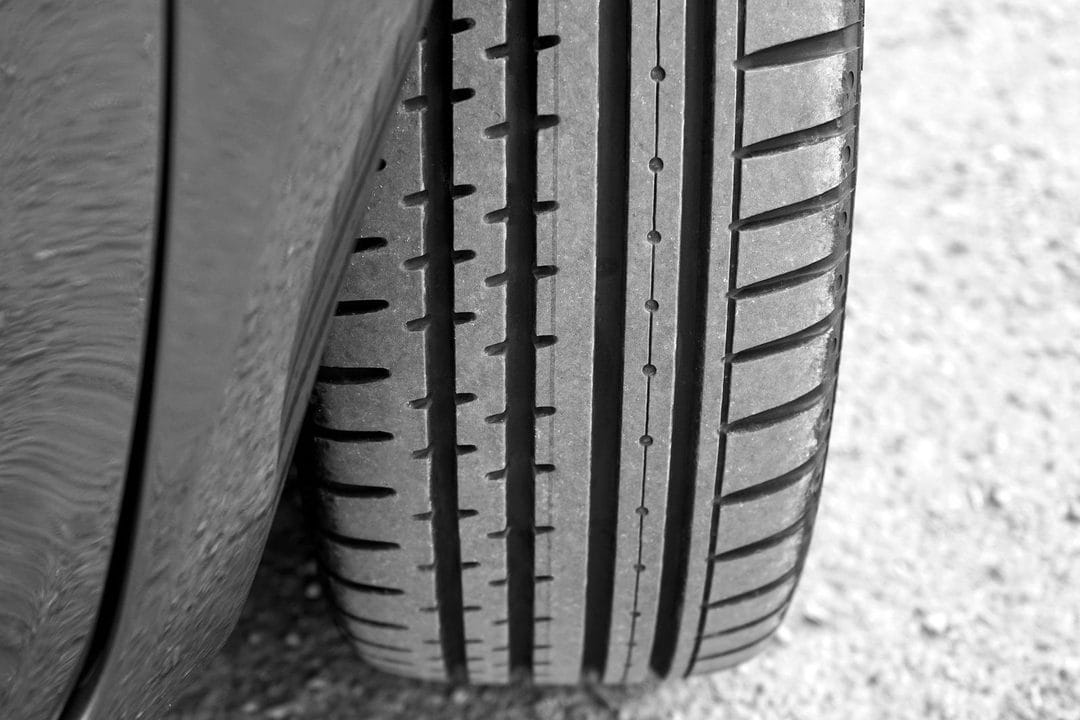
A family heading south on I-75 outside Chattanooga last July felt the rear driver's-side tire go before they saw anything — a hard pull, a thump, then shredded rubber slapping the wheel well at 70 mph. The tire had passed a visual check at a gas station two hours earlier. What nobody checked was the pressure, and what nobody accounted for was that the asphalt surface temperature that afternoon was pushing past 140 degrees. That combination — a tire already running a few pounds low, sitting on pavement hot enough to fry an egg, at highway speed for two straight hours — is close to the exact recipe behind most summer blowouts, and it has almost nothing to do with how new or old the tire looks.
Why heat is the trigger, not the root cause
Tire failure in summer almost always traces back to underinflation, not heat itself — heat just turns a marginal problem into a sudden one. A tire that's 20% underinflated flexes more with every rotation, and that flexing generates internal friction that raises the tire's internal temperature well above the already-hot pavement around it. NHTSA data on tire-related crashes shows a sharp seasonal spike from June through August, and the agency's own research points to underinflation combined with high ambient and pavement temperatures as the dominant factor, not tread age or mileage alone.
The tricky part is that underinflation by 15-20% is often invisible to the eye. A tire has to lose a substantial amount of air before it looks visibly low, which means the "it looks fine" check most drivers rely on is checking for a problem severe enough that it would already be dangerous. A $12 pressure gauge tells you what your eyes can't.
The three numbers that actually matter
The pressure on the door jamb, not the sidewall
The number molded into the tire's sidewall is the maximum pressure the tire can safely hold, not the recommended pressure for your vehicle — that number lives on a sticker inside the driver's door jamb, and it's usually 6-8 psi lower than the sidewall max. Filling to the sidewall number is a common mistake that leaves less margin for heat expansion, not more.
Pressure changes about 1 psi for every 10 degrees
Tire pressure rises roughly 1 psi for every 10-degree increase in temperature, which means a tire set correctly at 70 degrees in a cool morning garage can read several psi higher by early afternoon on a 100-degree day — and several psi lower again once temperatures drop overnight. Check pressure when tires are cold, ideally first thing in the morning before driving, since a reading taken after even 20 minutes of driving will already be skewed high.
Tread depth below 4/32" on long summer drives
The legal minimum in most states is 2/32", but that number is a legal floor, not a safety recommendation — tread below 4/32" measurably increases stopping distance on hot, softened asphalt and raises blowout risk on long highway stretches. The penny test everyone knows about (Lincoln's head disappearing into the tread) is a rough proxy at best; a $6 tread depth gauge from any auto parts store gives an actual number instead of a guess.
Road trips multiply every one of these risks at once
A loaded-down SUV heading to the coast for a week carries significantly more weight than the same vehicle on a normal commute, and that extra weight combined with hours of sustained highway speed on hot pavement is precisely the scenario where a borderline tire fails. AAA's July call-volume data consistently shows tire-related breakdowns as one of the top reasons for roadside assistance calls during peak travel weeks, well ahead of dead batteries or overheating engines during that specific stretch of the calendar.
Checking pressure cold, before the car's been loaded and before it's spent any time in the sun, is the one step that catches most of this risk before it becomes a problem at highway speed three states away.
Tire age matters even when the tread still looks fine
A tire can have plenty of tread left and still be dangerously old — the rubber compound breaks down over years of heat cycling and UV exposure, and that degradation shows up as tiny cracks in the sidewall long before the tread wears out. Most tire manufacturers, including Michelin and Continental, recommend replacement at 6 years from the manufacture date regardless of remaining tread depth, and several major manufacturers cap it at 10 years as an absolute limit. A tire that spent six summers baking on hot driveway concrete has aged faster than one kept in a garage, even with identical mileage.
The manufacture date is stamped right on the sidewall as a four-digit DOT code — the last two digits are the year, the first two are the week. A tire reading "2318" was built in the 23rd week of 2018, which puts it past the six-year mark most manufacturers flag as the point to start planning a replacement, tread depth aside. This applies just as much to the spare sitting untouched in the trunk, which often outlasts several sets of road tires simply because nobody thinks to check it.
Don't let a dashboard light replace an actual check
Tire Pressure Monitoring Systems only trigger a warning once pressure drops around 25% below the recommended level in most vehicles sold in the US — by the time that light comes on, the tire has already been running dangerously low for a while, possibly for days. Treating TPMS as a backup rather than a substitute for a monthly gauge check closes exactly the gap that catches a lot of drivers off guard on a hot afternoon.
Some drivers assume a working TPMS light means the tires are being monitored continuously and precisely. It doesn't work that way, and the 25% threshold is wider than most people assume.
What a blowout actually feels like, and what not to do
A rear-tire blowout typically feels like a sudden pull or sway rather than a loud bang first — the sound often follows a half-second after the car already starts drifting. The instinct to slam the brakes is the wrong one; hard braking shifts weight forward and can make a rear blowout considerably harder to control. Ease off the accelerator, hold the wheel steady, and let the car slow gradually before easing toward the shoulder.
Practicing this mentally before a road trip, not during one, is the only realistic way to override the brake-slamming instinct in the two or three seconds a real blowout actually gives you.
A five-minute check that covers most of it
Cold pressure on all four tires plus the spare, tread depth with an actual gauge rather than a coin, and a visual scan for sidewall bulges or uneven wear patterns — that's the entire routine, and it takes less time than filling the gas tank. Costco, Discount Tire and most dealership service departments will check and adjust pressure for free even if you didn't buy the tires there, which removes the "I don't own a gauge" excuse entirely.
Not every blowout is preventable — road debris and sidewall punctures happen to properly inflated tires too. But the underinflated-tire-on-hot-pavement combination that causes most of them is about as preventable as a car problem gets, and it costs nothing but five minutes in a driveway before the temperature climbs.