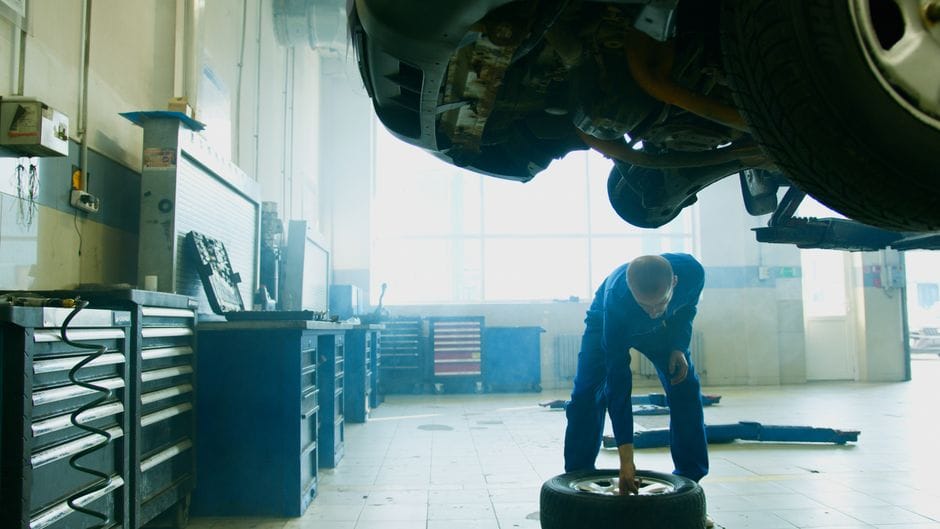
Tires wear unevenly because each corner of the car does a different job. Rotating them on a schedule spreads that wear around so the whole set lasts longer and grips evenly. It's a quick job, often free with an oil change, and it pays for itself.
Why Tires Wear Unevenly
On a front-wheel-drive car, the front tires handle accelerating, most of the braking, and all of the steering, so they wear far faster than the rears. On rear- and all-wheel-drive vehicles the pattern differs but the principle holds: without rotation, two tires age out long before the others, forcing you to buy in pairs and mix tread depths.
Patterns by Drivetrain
- Front-wheel drive: fronts go straight back; rears cross to the opposite front.
- Rear-wheel drive: rears go straight forward; fronts cross to the opposite rear.
- All-wheel drive: a full cross pattern, swapping front to back on opposite sides.
Directional tires, marked with an arrow, only swap front to back on the same side. Staggered setups with different front and rear sizes may not be rotatable at all; check before you start.
How Often
A good rule is every 5,000 to 7,500 miles, which conveniently lines up with many oil-change intervals. Pairing the two means you rarely forget. If you notice cupping, feathering or a pull, rotate sooner and have the alignment checked, since uneven wear often points to a suspension issue.
Do It With the Other Checks
Rotation is the perfect moment to set tire pressures to spec, inspect for nails or sidewall damage, and eyeball the brake pads through the open wheels. A set of tires is a few hundred dollars; a rotation costs minutes. Skipping it is one of the easiest ways to throw money away on rubber.