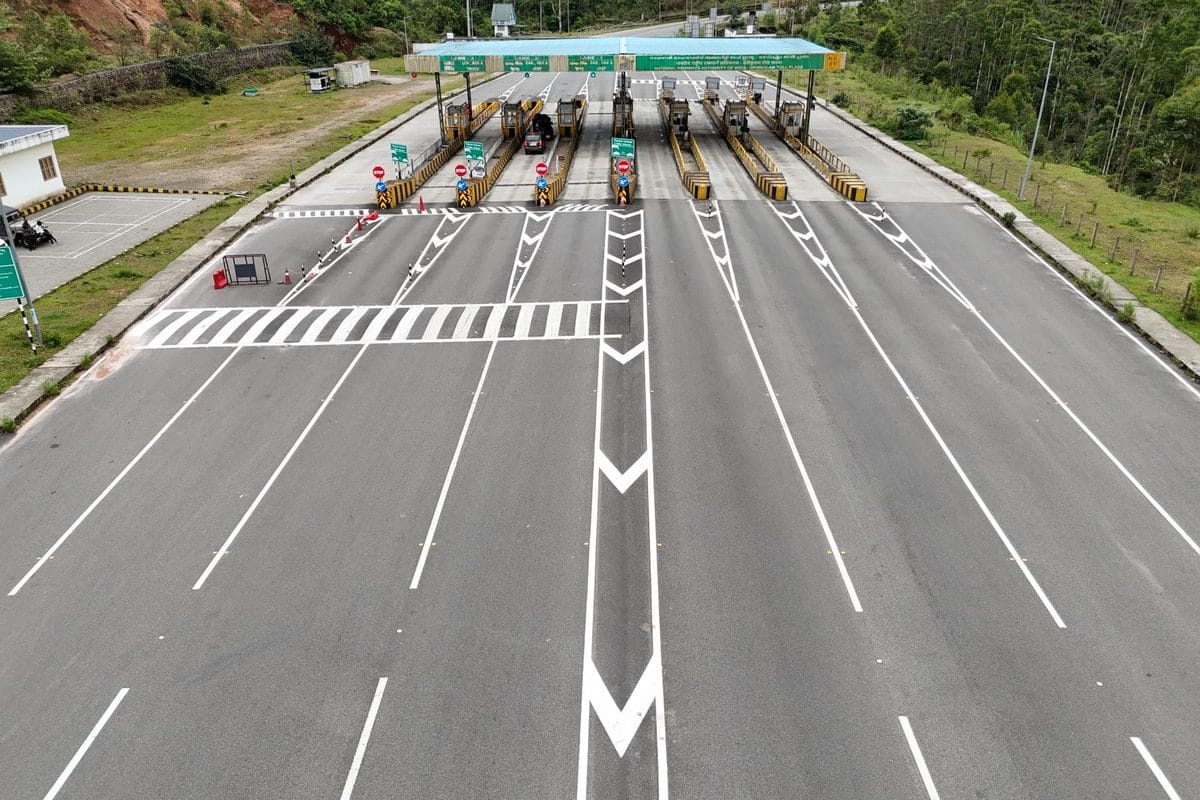
Somewhere around the Nevada–California line, the beeping stops. For nine states behind you, the black transponder box on your windshield chirped every time you rolled under an overhead gantry, deducting a few dollars and letting you keep driving without touching the brakes. Then the highway narrows into California, the toll camera photographs your plate anyway, and the transponder stays silent — because California's tolling network doesn't recognize it, has never recognized it, and isn't planning to change that anytime soon.
That silence is where a lot of road-trip budgets quietly break down this summer, and it has nothing to do with gas prices or hotel rates. It's a patchwork of roughly a dozen regional toll systems that were never built to talk to each other, layered on top of a rental car industry that has figured out exactly how to profit from the confusion. Drive from Philadelphia to Orlando and your transponder works the whole way. Drive from Philadelphia to San Francisco and it stops working somewhere around Nevada, then a bill for the unpaid tolls shows up in your mailbox six weeks later with an administrative fee stapled to it.
Why One Country Still Runs on a Dozen Different Toll Systems
Toll roads in the United States were built by dozens of separate state authorities and private turnpike operators over the better part of a century, and each one bought its own gantry hardware, its own billing software, and its own transponder standard. E-ZPass, launched in the 1990s by a coalition of East Coast agencies, eventually grew into the country's largest network simply because those states agreed to share infrastructure. California's FasTrak, Texas's TxTag, and a half-dozen smaller systems never joined that coalition, and there's no federal mandate forcing them to. Congress has floated national interoperability rules more than once; none of them has passed.
The result is a country where your toll tag's reach depends entirely on which agency issued it, not on where you're driving.
What Actually Talks to Each Other Right Now
The core E-ZPass network covers roughly 19 states, stretching from Maine down through Florida and as far west as Illinois — Delaware, Florida, Georgia, Illinois, Indiana, Kentucky, Maine, Maryland, Massachusetts, Minnesota, New Hampshire, New Jersey, New York, North Carolina, Ohio, Pennsylvania, Rhode Island, Virginia, and West Virginia all take a standard E-ZPass transponder on at least some of their toll roads. Florida's SunPass PRO goes further: because Florida fully integrated with the E-ZPass network a few years back, a SunPass PRO transponder works on every E-ZPass-compatible road plus Georgia's Peach Pass corridors and North Carolina's Quick Pass lanes, putting its total reach at roughly 23 states. If your trip stays east of the Mississippi and north of Florida, one transponder will realistically carry you the whole way, and that's worth knowing before you pay for a rental car company's toll plan you don't actually need.
Where It Breaks Down Completely
Texas, Oklahoma, and Kansas run their own club, a Central U.S. interoperability hub built around TxTag and its regional partners, and while those three states' tags work with each other, they don't talk to E-ZPass on most roads. California is the sharpest break of all: FasTrak is the only transponder California toll roads, bridges, and express lanes accept, and E-ZPass hardware simply won't register there at all. Drivers who rent a car in Los Angeles and expect their Illinois I-Pass or New York E-ZPass to work hit the exact same wall people hit crossing from Nevada — the transponder is invisible to California's readers, full stop. Out-of-state drivers without a FasTrak account get billed by license plate instead, usually at a higher per-crossing rate than FasTrak customers pay, with a processing fee added on top before the invoice even reaches you. That distinction matters, because an unresolved California toll bill can escalate into a formal violation notice carrying its own added penalty if it sits too long, a step most E-ZPass-network states skip in favor of a simple follow-up invoice. A handful of other states, Colorado and Louisiana among them, sit largely outside every major network too, so cash or a same-day local account is sometimes the only option on those specific roads.
The Rental Car Trap Nobody Reads the Fine Print On
Rental companies solved the multi-state tag problem for themselves years ago, and they solved it profitably. Hertz routes toll charges through a third-party service called PlatePass: every day your rental crosses an electronic toll point without your own transponder mounted, Hertz charges the full toll rate plus an administrative fee that commonly runs $9.99 per toll-day, with the exact rate varying by pickup location. Avis charges a $6.95 convenience fee per toll-day, capped at $34.75 for the month, and bills tolls at the highest posted rate rather than the discounted rate a tag-holder would pay. Enterprise's TollPass runs $3.95 per usage day with a $19.75 cap per rental, National's version runs $3.95 to $5.35 per day capped at $26.75, and Alamo charges $4.95 per day capped at $34.65. None of these fees show up on your receipt when you drop the car off. They post to your credit card one to three weeks later, arriving as a separate, easy-to-miss charge long after the trip is a memory.
When the Rental Company's Plan Is Actually the Smarter Buy
Here's the part that cuts against the instinct to reject every rental fee on principle: if your itinerary crosses three or four toll points in a single day — a bridge into the city, a downtown expressway, another bridge back out — a flat per-day toll plan can beat paying the marked-up plate-by-mail rate on each individual crossing, especially in cities where an uncollected toll carries its own processing penalty on top of the toll itself. The math flips depending on how many gantries you'll actually hit, not on some fixed rule about rental fees being a scam. Run the numbers for your actual route before deciding, not after the invoice arrives.
How to Actually Protect Your Wallet This Summer
Bring your own transponder if you own one and you're driving into its home network — mount it before you leave the driveway, because that single habit erases the rental company's daily fee entirely for the whole trip. Skip the flat-rate toll plan on a rental if your route only crosses one bridge or one turnpike stretch; paying that single toll by app or by mail almost always costs less than a week of daily convenience fees. Check your specific route against each state's toll authority website before you leave, since coverage inside a nominally "compatible" state is often partial rather than statewide. A few habits, none of them complicated, make the difference between a manageable toll bill and a nasty credit card surprise:
- Register your license plate directly with any toll authority on your route that doesn't take your home tag — plate-billed accounts usually beat the pay-by-mail penalty rate.
- Photograph your rental agreement's toll section at pickup, since the daily cap and fee structure vary even within the same company.
- If you're renting in California without a FasTrak account, budget for the plate-billed invoice arriving weeks after you've returned the car.
- Statements are worth watching for three weeks after any toll-heavy trip, since that's the typical lag before rental toll charges post — long after most people have stopped thinking about the rental at all.
None of this is complicated once you know the map. What trips people up isn't the tolling technology itself — it's the assumption that a system this common must, by now, work the same way everywhere. It doesn't, and the gap between what "should be interoperable" and what actually is interoperable is exactly where the extra charges live.